
Last updated November 15, 2026
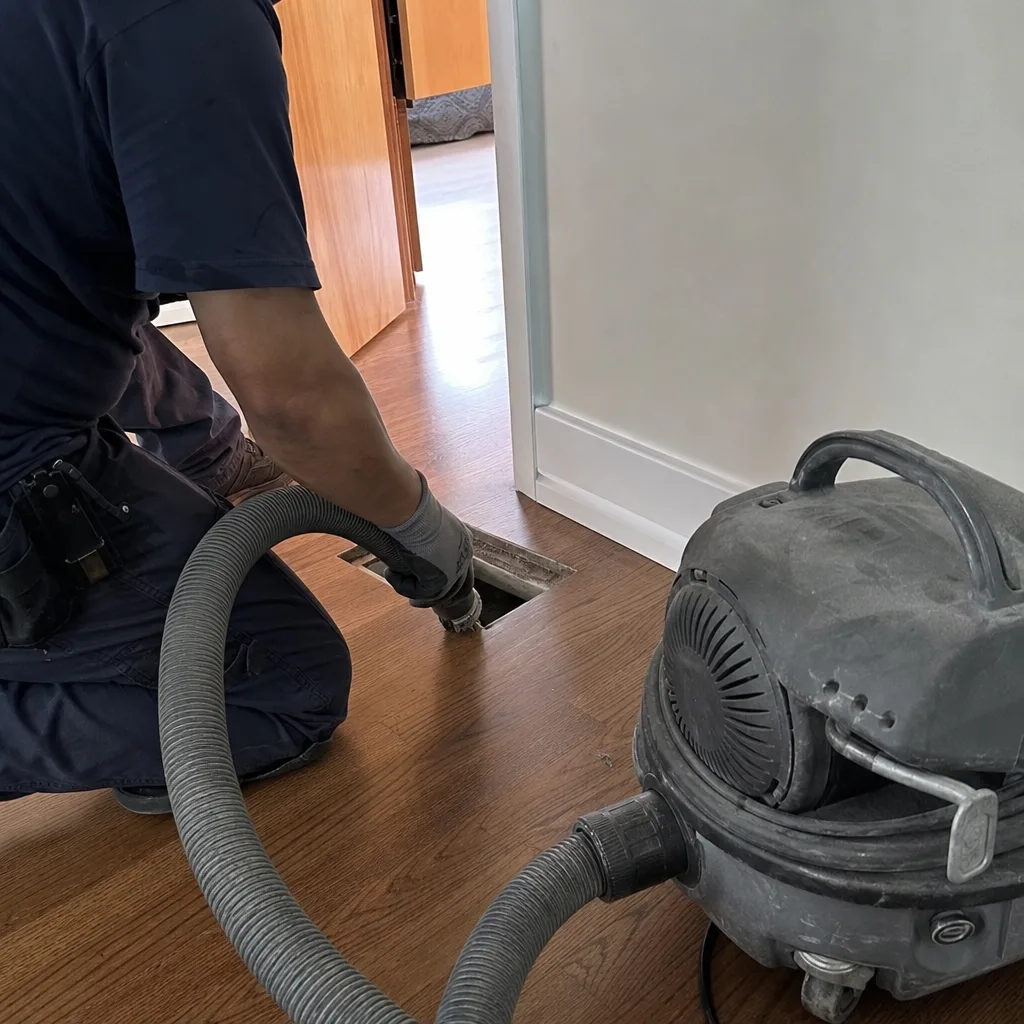
 Whole-home duct cleaning
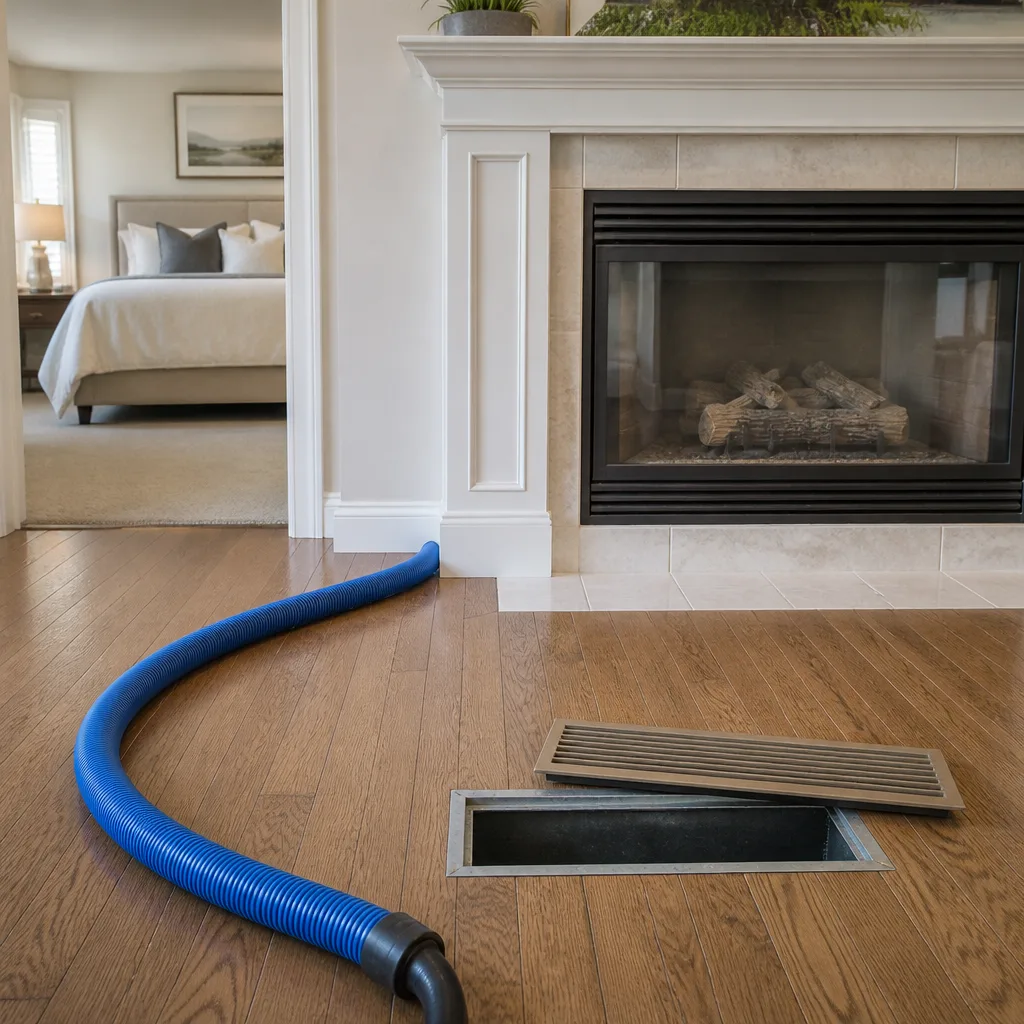
 Dryer vent cleaning
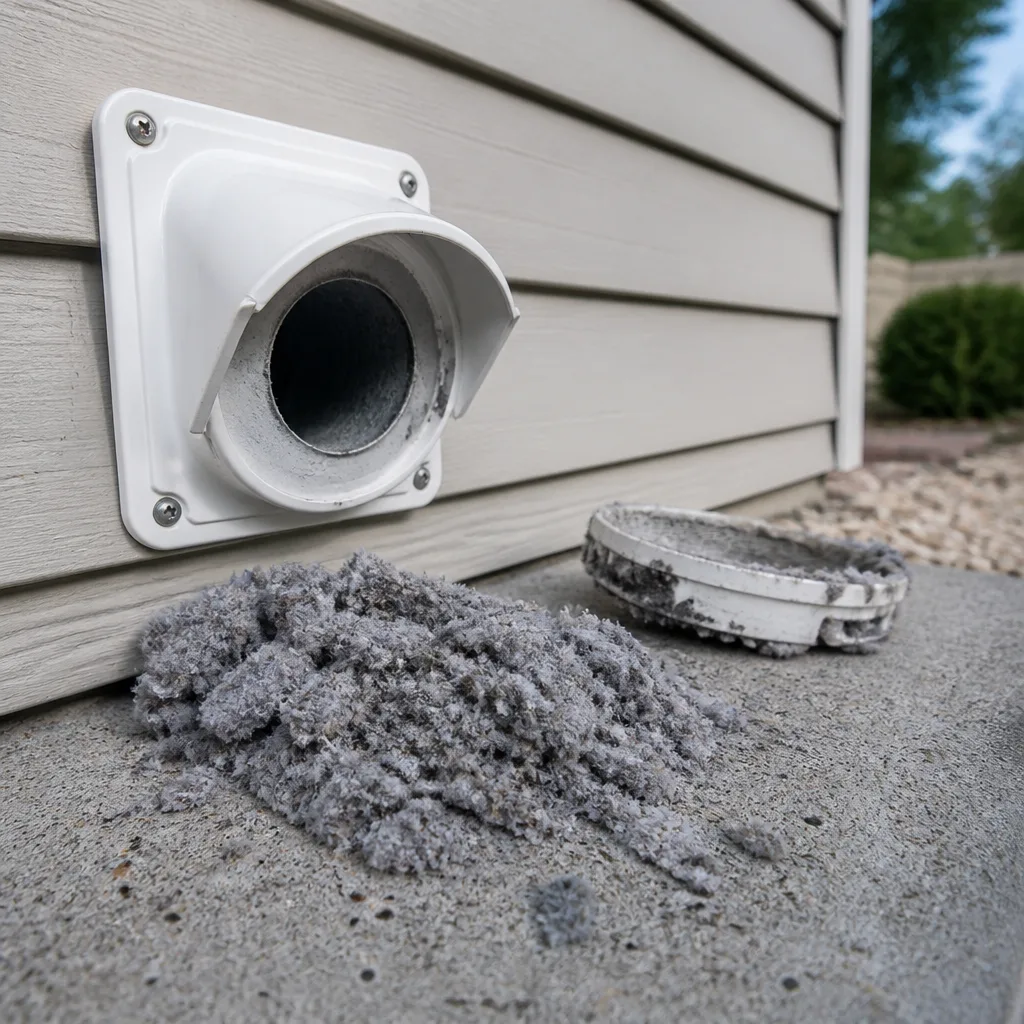
 Camera inspection
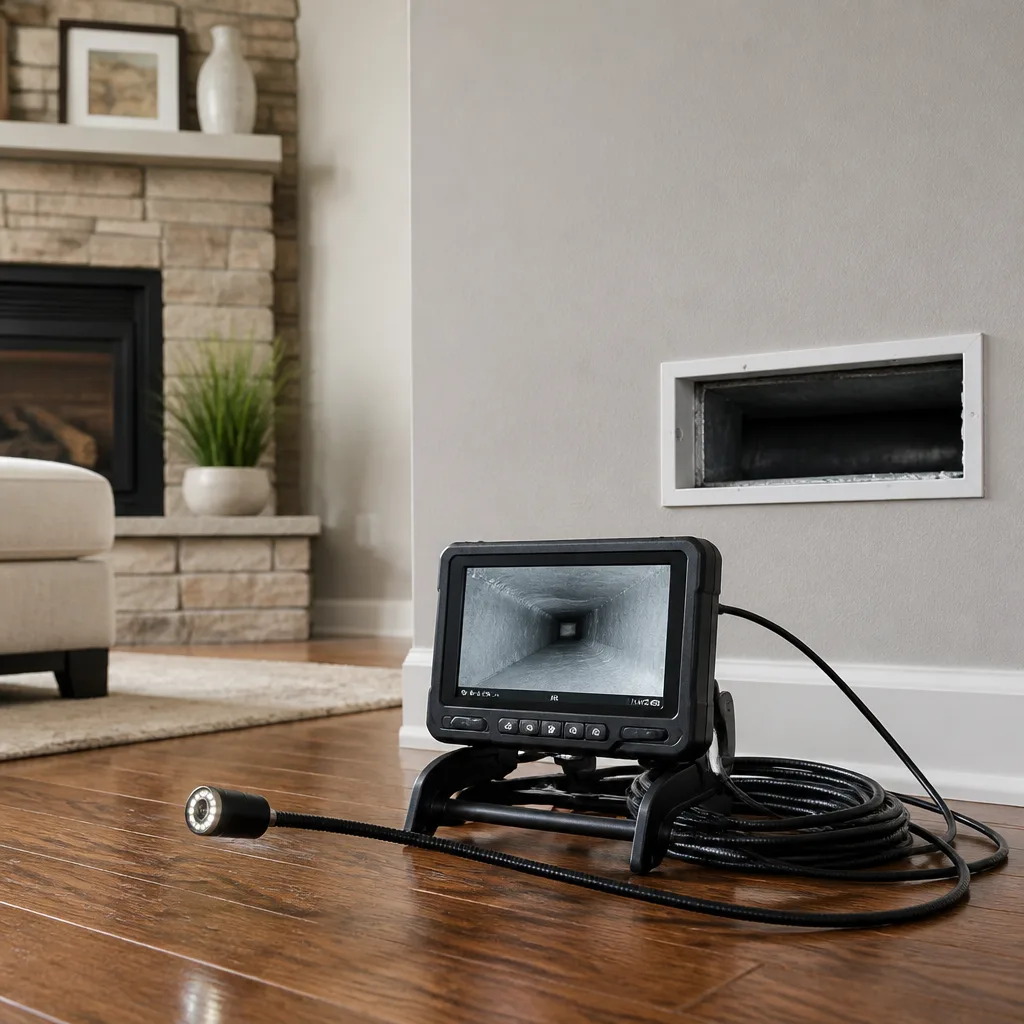
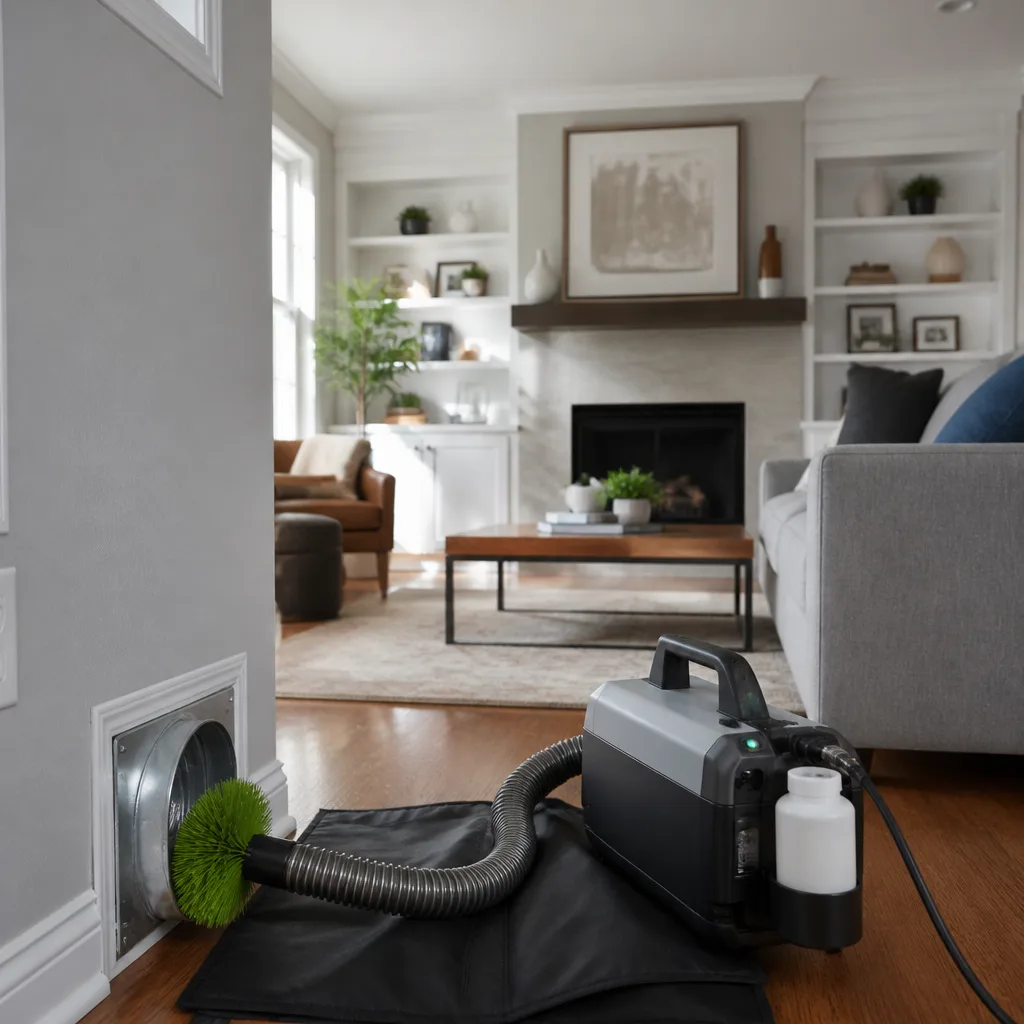 Sanitizing & deodorizing
Whole-system duct and dryer vent check with before-and-after photos - you see exactly what came out of your vents
That "$99 whole-house special" is a bait ad - the real number appears once they are in your hallway, or the "clean" is a shop-vac at the register. We photograph the inside of your ducts before and after instead.
The Complete Guide to Air Duct Cleaning in Richmond
Most air duct guides are written for a house that doesn’t exist: a median-age home in a neutral climate, with neat rigid metal ducts and average humidity. Richmond homes don’t match that template. Houses here sit close to the bay and under the marine layer, in neighborhoods full of older housing stock where flexible duct and fiberglass lining are common. The moisture and smoke conditions inside those systems create contamination patterns that a generic guide never touches. This guide maps the full cleaning process to Richmond’s real conditions, from what grows inside bay-side ductwork to what wildfire smoke season leaves behind.
Quick Answer
Air duct cleaning in Richmond means mechanically agitating the entire duct system and extracting the debris under negative pressure, not just wiping the visible registers. In bay-side housing, that usually means addressing damp-driven growth in older flexible or fiberglass-lined ductwork as well as everyday dust. A thorough job runs from the air handler and access panels all the way to every supply and return, then verifies the result before anyone packs up.
Styles & brands we work with
- Whole-home duct cleaning
- Dryer vent cleaning
- Camera inspection
- Sanitizing & deodorizing
Table of Contents
- Why Richmond Ductwork Ages Differently
- How the Marine Layer Changes What’s Inside Your Ducts
- Older Richmond Housing and Its Duct Materials
- Source Removal vs. Contact Vacuum: What “Cleaning” Actually Means
- What a Full Cleaning Looks Like, Step by Step
- Wildfire Smoke Season and Your Ductwork
- When Cleaning Isn’t the Whole Answer: Duct Repair
- How Often Richmond Homes Really Need It
Why Richmond Ductwork Ages Differently
Ductwork in Richmond lives in a climate that’s mild but damp, and mild-and-damp is exactly what mold and dust mites prefer. Winters here don’t bring hard freezes, so duct surfaces rarely get the deep dry-out that inland homes see. Instead, the system spends most of the year in a narrow, humid range that lets biological growth establish itself slowly and quietly. That’s the opposite of what most maintenance advice assumes.
The practical result is that two houses of the same age and square footage can have very different duct interiors depending on where they sit in Richmond. A home in the flats, closer to the bay and deeper into the marine layer, often carries more moisture in its ductwork than a home up in the hills where the fog burns off sooner. Homes near Wildcat Canyon and the eastern edges tend to run drier, but they pick up more wind-borne dust and pollen from the open land around them. Neither situation is worse; they’re just different problems that need different handling.
We see this pattern repeatedly. A homeowner calls because the house smells faintly musty when the heat first kicks on in the fall, or because allergies flare every time the system cycles. Often nothing is visibly wrong at the registers. The issue is inside the run, in the parts of the system no one looks at. That’s the whole reason a real inspection matters before a cleaning quote gets thrown around. You need to know what you’re dealing with in Richmond specifically, not what a call center in another state assumes about your house.
Richmond also sits in a region where outdoor air quality swings. The same geography that traps the marine layer can hold pollutants close to the ground on still days, and seasonal smoke from regional fires adds another layer. Your duct system is the place all of that airborne material settles when it makes it indoors.
How the Marine Layer Changes What’s Inside Your Ducts
The marine layer is the low band of cool, moist air that rolls in off the bay and sits over Richmond for much of the year, especially in the mornings. It keeps daytime temperatures even, which feels pleasant. Inside your ductwork, though, that steady moisture is the raw material for mold colonization. Mold needs a surface, a food source (household dust is plenty), and moisture. Richmond’s climate supplies the third ingredient more consistently than inland Bay Area cities do.
Compare Richmond to, say, Walnut Creek or Concord on the other side of the hills. Those places bake off their morning moisture by mid-day and run much drier overall. Richmond holds onto it. The difference matters because duct surfaces that stay slightly damp between cooling cycles give mold spores a chance to root and spread rather than just settle. Over months and years, that’s how a duct interior goes from “dusty” to “colonized.”
What you might notice as a homeowner:
- A musty or earthy smell that shows up strongest when the system first starts after sitting idle
- Allergy symptoms that get worse indoors, especially in the rooms furthest from the air handler
- Visible dark speckling around supply registers or on the grilles themselves
- Condensation or dampness near the air handler or in flex duct runs
- Dust that returns faster than it should after you clean the house
None of these prove mold on their own, and we don’t diagnose health conditions. What they do signal is that the duct interior deserves a real look with proper equipment. A flashlight-and-mirror glance won’t tell you much. A camera inspection into the runs will.
This is also where cleaning method matters. A vacuum that only pulls at the surface of settled dust does little against growth that’s attached itself to fiberglass lining or flex duct walls. Mechanical agitation is what breaks that bond, which is why professional-grade rotary brush systems matter more in a climate like Richmond’s than they would in a dry one. The right process, not speed, is what actually clears a damp-affected system.
Older Richmond Housing and Its Duct Materials
A large share of Richmond’s housing was built before 1980, and the duct systems in those homes were often designed differently than what goes into a new build. That matters because duct material dictates cleaning method. You can’t treat every system the same and expect a good result.
The common materials you’ll find in older Richmond homes:
- Flexible duct (flex duct): a corrugated plastic inner liner inside insulation, often used for retrofits and branch runs. The ridges trap debris, and the liner can tear or sag if handled roughly.
- Fiberglass-lined rigid duct: sheet metal with an interior fiberglass acoustic and thermal lining. Once the lining gets damp and soiled, it’s harder to clean fully and sometimes needs replacement.
- Rigid sheet metal: the most forgiving and cleanable material, common in older trunk lines.
- Duct board: rigid fiberglass panels formed into duct. It cleans poorly and is often better replaced than scrubbed.
Here’s the part budget cleaners skip: a rotary brush run through fiberglass-lined or flex duct at the wrong speed and pressure can damage the liner. So the technician has to know what the duct is made of before the equipment goes in. In our experience, a proper job starts with checking material and condition at the access points, then adjusting the approach to the specific system. Modern rigid metal tolerates an aggressive brush; thirty-year-old flex duct does not.
Older Richmond homes also tend to have ductwork that’s been modified over the decades: a room added here, a system replaced there, a branch run spliced in to reach a converted garage. Those additions often introduce leaks, disconnected joints, and mismatched materials. A cleaning that also includes a repair capability catches these. A cleaning-only service doesn’t, which is why the full picture matters. You can read more about our air duct cleaning approach if you want the specifics of what gets inspected. Older systems in neighborhoods like the Iron Triangle, North and East, and the areas around Point Richmond are often where the most layered, amended ductwork turns up.
Source Removal vs. Contact Vacuum: What “Cleaning” Actually Means
“Air duct cleaning” is a label, not a standard. Two companies can use the phrase and do completely different work. The gap between them is the single biggest reason some quotes come in so much lower than others, and understanding it is the most useful thing you can take from this guide.
Contact vacuum cleaning means a vacuum head touches accessible surfaces: registers, grilles, the plenum near the air handler, maybe a short reach into the nearest run. It looks busy. It can even feel thorough. But it never disturbs debris that’s adhered to duct walls or settled deep in the branch runs, so contaminants get displaced rather than removed. The system looks cleaner at the openings and stays dirty everywhere else.
Source removal means the entire system is put under negative pressure and every surface is mechanically agitated so the debris is loosened and captured. That requires two things contact vacuuming lacks: a way to seal and depressurize the system, and equipment strong enough to break debris free and hold it under containment.
That’s the difference professional-grade equipment makes. Our Meadow Air Duct Cleaning process uses Rotobrush rotary brush systems to agitate duct walls mechanically, Nikro HEPA-rated vacuums to capture what’s loosened rather than blowing it into the living space, and Abatement Technologies negative air machines to hold the whole system under a containment-grade pressure differential while the work happens. These are tools built for remediation professionals, brought to your home. They aren’t consumer shop vacs dressed up as industrial equipment, which is often what shows up when a quote looks too good to be true.
If you take one question away from this guide, make it this one to ask any duct cleaner: “Do you use negative pressure and mechanical agitation, and what equipment do you use?” A straight answer tells you a lot. A vague one tells you more.
What a Full Cleaning Looks Like, Step by Step
A full source-removal cleaning follows a sequence. Here’s what that looks like from the moment the technician sets up to the moment the registers go back on. If a company can’t describe this process clearly, that’s a warning sign.
- Evaluate the system. Identify duct material, system layout, and every access point. Note any damage, disconnected joints, or heavily soiled areas that will need extra attention.
- Set up containment. Place negative air machines to establish a pressure differential that keeps loosened contaminants from escaping into the living space. This is a containment step, not a cleanup step, and it happens before any debris moves.
- Open the system at every access point. Some systems have proper access panels; others need access created at specific points so the full length of each run is reachable.
- Agitate each run. Rotary brush systems run through the supply and return runs, mechanically loosening debris from the duct walls. This is the step contact vacuuming skips.
- Extract under HEPA filtration. The HEPA-rated vacuum pulls loosened debris out and captures it, so particles aren’t redistributed into the home.
- Clean the components. The air handler, blower, plenum, and coil area get attention too, since they hold as much settled debris as the ducts themselves.
- Clean the registers and grilles. Supply and return covers are removed, cleaned, and reinstalled so the visible finish matches the work behind the wall.
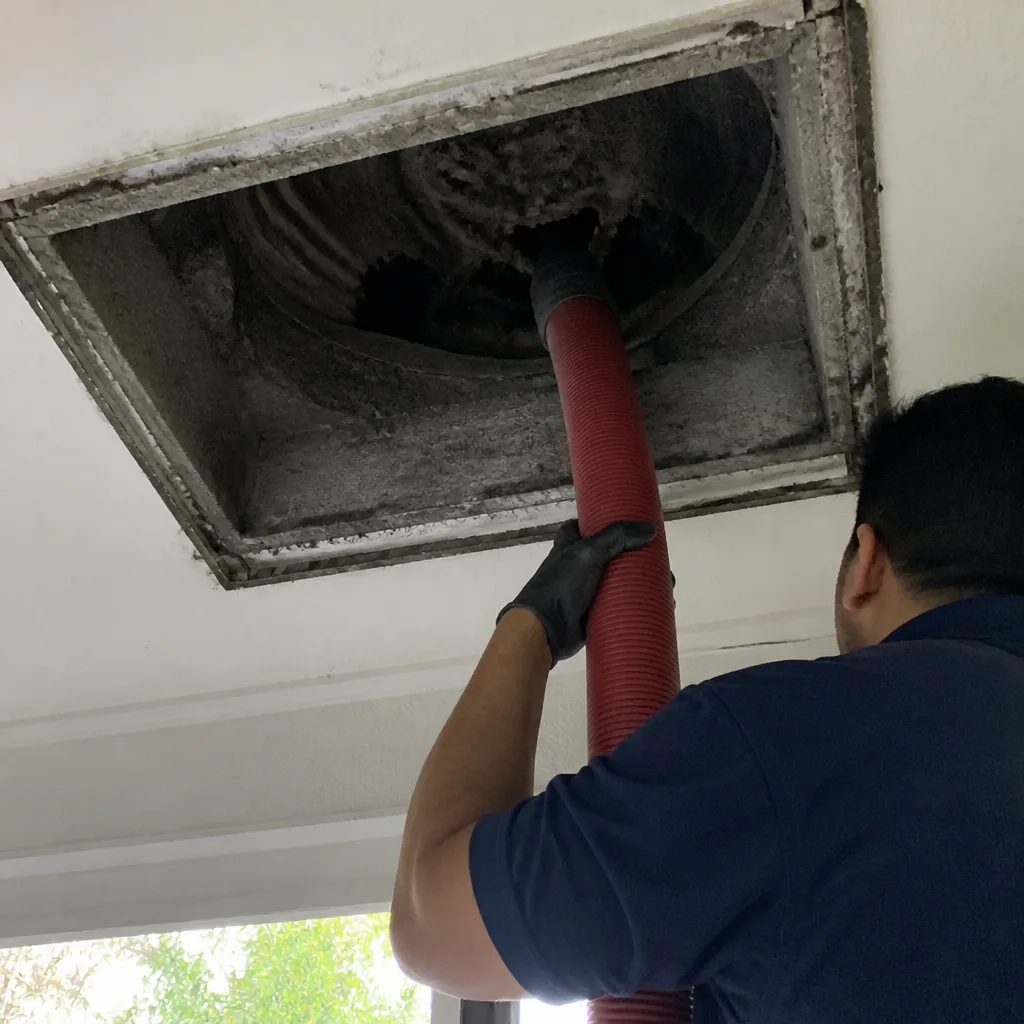
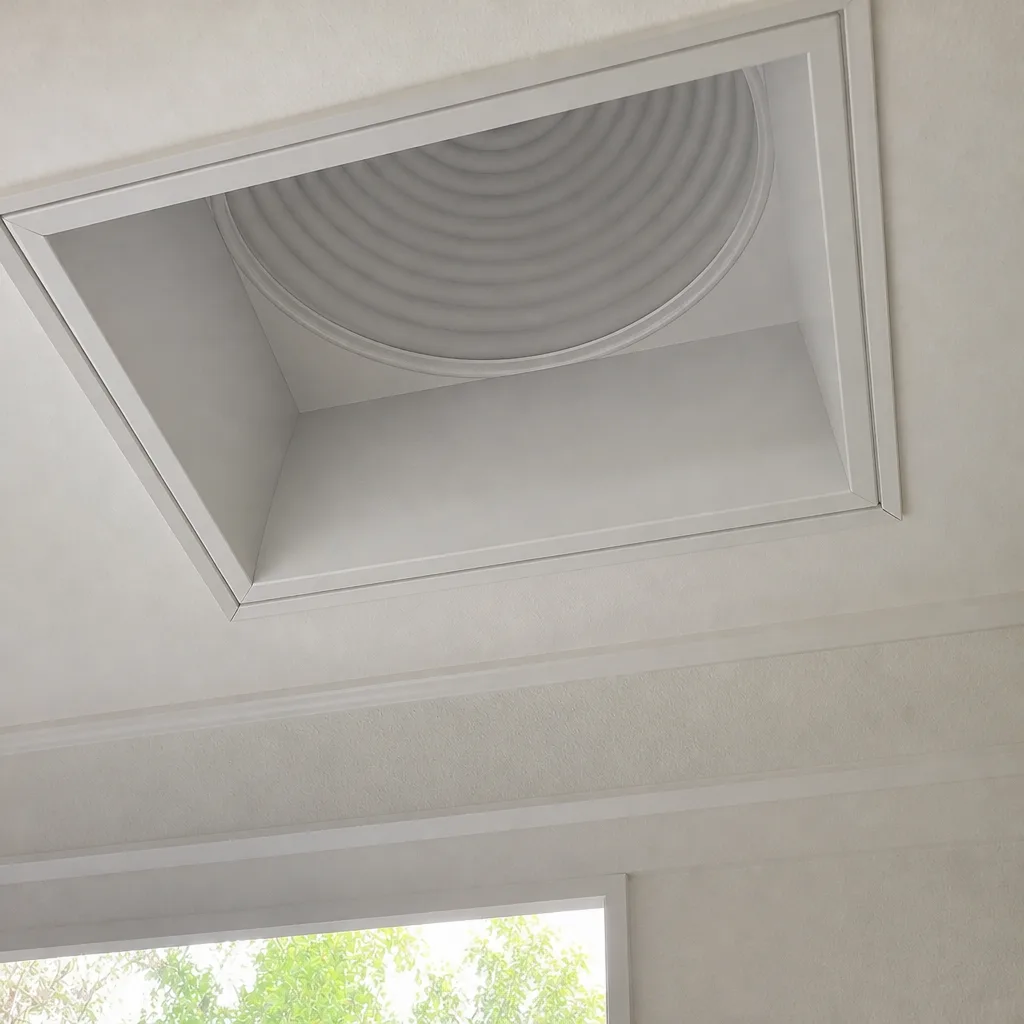
- Verify and photograph. Before-and-after photos of the system document what was actually removed. You see your own ducts, not a stock image.
That final step answers the question every homeowner quietly has: how do I know the work was actually done? Photos from inside your own system are the honest answer. Price is one flat price per system agreed before work starts, and the written estimate sets the final total, so there’s no per-vent formula to game or surprise line item at the end. If your home also has whole-home air quality equipment, we work alongside systems like Honeywell and Aprilaire, so the cleaning and the air quality setup get treated as one system rather than strangers to each other.
Wildfire Smoke Season and Your Ductwork
Wildfire smoke and regional air quality spikes are a fact of Bay Area life now, and Richmond is not exempt. When the air quality index climbs during a smoke event, fine particulate matter makes its way indoors. A well-sealed home still lets some in, and once it’s inside, your duct system is where a lot of it settles. Standard cleaning schedules don’t account for this because most of them were written for regions that don’t see smoke events at all.
What that means in practice:
- After a significant smoke event, duct interiors can carry a layer of fine ash and particulate on top of existing dust
- That material can recirculate every time the system runs, especially through supply registers in the rooms you use most
- Homes that rely on high-MERV filtration or whole-home air quality systems still benefit from duct cleaning after a heavy smoke season, since filtration catches air in motion but doesn’t remove what’s already settled
- If you smell smoke indoors when the system runs after the outdoor air has cleared, that’s a strong signal to have the ductwork checked
We’ve seen this pattern play out in Richmond homes near the bay and up toward the hills, where smoke layers can sit against the terrain. The right response isn’t panic cleaning after every event. It’s knowing your system’s baseline and adjusting your schedule when a heavy smoke season has passed. If you can’t remember the last time the ducts were cleaned and you’ve been through multiple smoke seasons since, the schedule is overdue. Our dryer vent cleaning work follows the same principle of adjusting to actual conditions rather than following a generic calendar.
When Cleaning Isn’t the Whole Answer: Duct Repair
Sometimes cleaning reveals a problem that cleaning alone can’t solve. Disconnected flex runs, crushed sections, torn liner, separated joints, and ducts that were never sized correctly for the system: these are structural issues. A cleaning-only company will clean around them and move on. You’ll still have the leak, still have the pressure loss, still have the contamination coming back in faster than it should.
Air duct repair is a separate capability, and it’s one that matters in older Richmond housing stock where ductwork has been modified over the decades. A full inspection during cleaning can surface issues that a flashlight glance misses:
- Disconnected joints in the attic or crawlspace runs
- Collapsed or kinked flex duct blocking airflow to specific rooms
- Damaged or deteriorated fiberglass lining that should be replaced rather than cleaned
- Leaks at the air handler and plenum connections
- Improperly sized or routed branches added during past renovations
The advantage of having cleaning and repair under one company is simple: the same technician who finds the problem can fix it, and the diagnosis doesn’t get lost between two contractors. We clean it. If it’s broken, we fix it. That’s the whole idea. If your HVAC isn’t performing the way it should after a cleaning, the answer is usually in the ductwork, not in a new system.
How Often Richmond Homes Really Need It
Most general advice says every three to five years. For a Richmond home near the bay, in older housing stock, or in a household with allergies, pets, or recent renovations, that’s often too long. The marine layer and smoke seasons add load that a middle-of-the-country schedule doesn’t anticipate.
A more useful way to think about it:
- Recent renovation: clean after construction dust and debris have settled, not before. Drywall dust travels deep into ductwork.
- New to you home: clean before you move in if the previous owner’s schedule is unknown. You don’t know what’s inside the system you just bought.
- Allergy or asthma in the household: a shorter window, because you’re managing a health-sensitive environment. Let a proper inspection set the schedule, not a fixed number.
- Pets in the home: more frequent, because pet dander and hair load the system faster than any other source.
- After a heavy smoke season: check and clean based on what the inspection finds.
- Older housing stock: a more frequent look, because fiberglass-lined and flex duct hold contamination differently than rigid metal.
The honest answer is that frequency should follow the inspection, not the calendar. A camera inspection tells you what’s actually in there. Then the schedule fits your house, its materials, and how Richmond’s climate has treated it. That’s a better guide than any fixed interval.
Common Mistakes to Avoid
- Hiring on price alone. The cheapest quote is often cheapest because it’s contact vacuuming, not source removal. Ask what equipment and process the company uses before you book. The answer tells you what you’re actually buying.
- Assuming every duct material can be brushed the same way. Aggressive rotary brushing that’s fine for rigid sheet metal can damage flex duct and fiberglass lining. The technician has to identify the material first.
- Ignoring a musty smell until it’s a bigger problem. In Richmond’s humid climate, a smell that shows up when the system starts is often a moisture issue in the ductwork. Deal with it early rather than letting it spread through the run.
- Skipping the air handler and coil area. Cleaning only the ducts leaves a large portion of the system untouched. The blower and coil hold as much settled debris as the runs themselves.
- Not asking for before-and-after photos. If you can’t see what was removed from your own system, you can’t know the work was done. Photos are the simple proof.
- Keeping a fixed calendar regardless of conditions. A recent renovation, a smoke-heavy season, or a new pet all reset the clock. So does moving into an older Richmond home with an unknown service history.
- Ignoring leaks and disconnected joints. A cleaning that stops at surface debris leaves the structural problem in place, and contamination comes right back through the gaps. Fix the system, not just the dirt.
See the difference
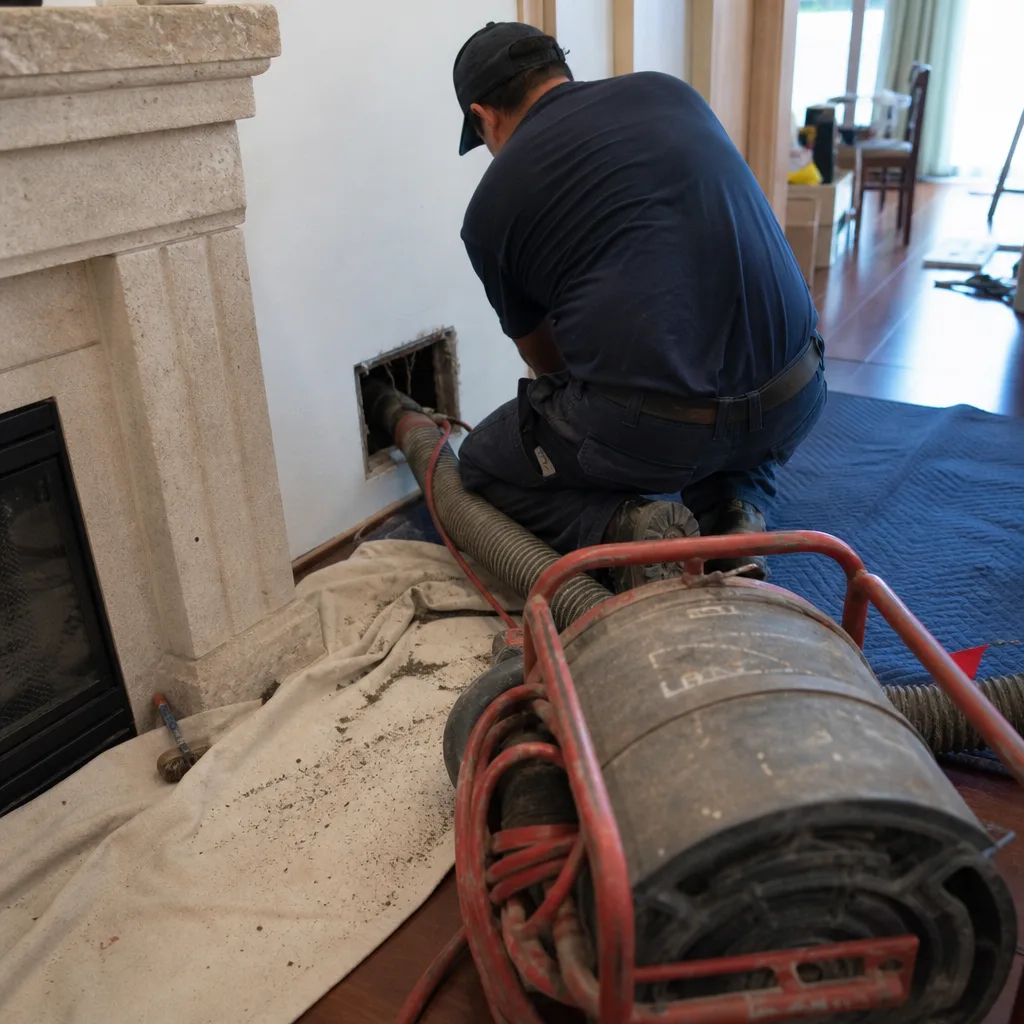 Before
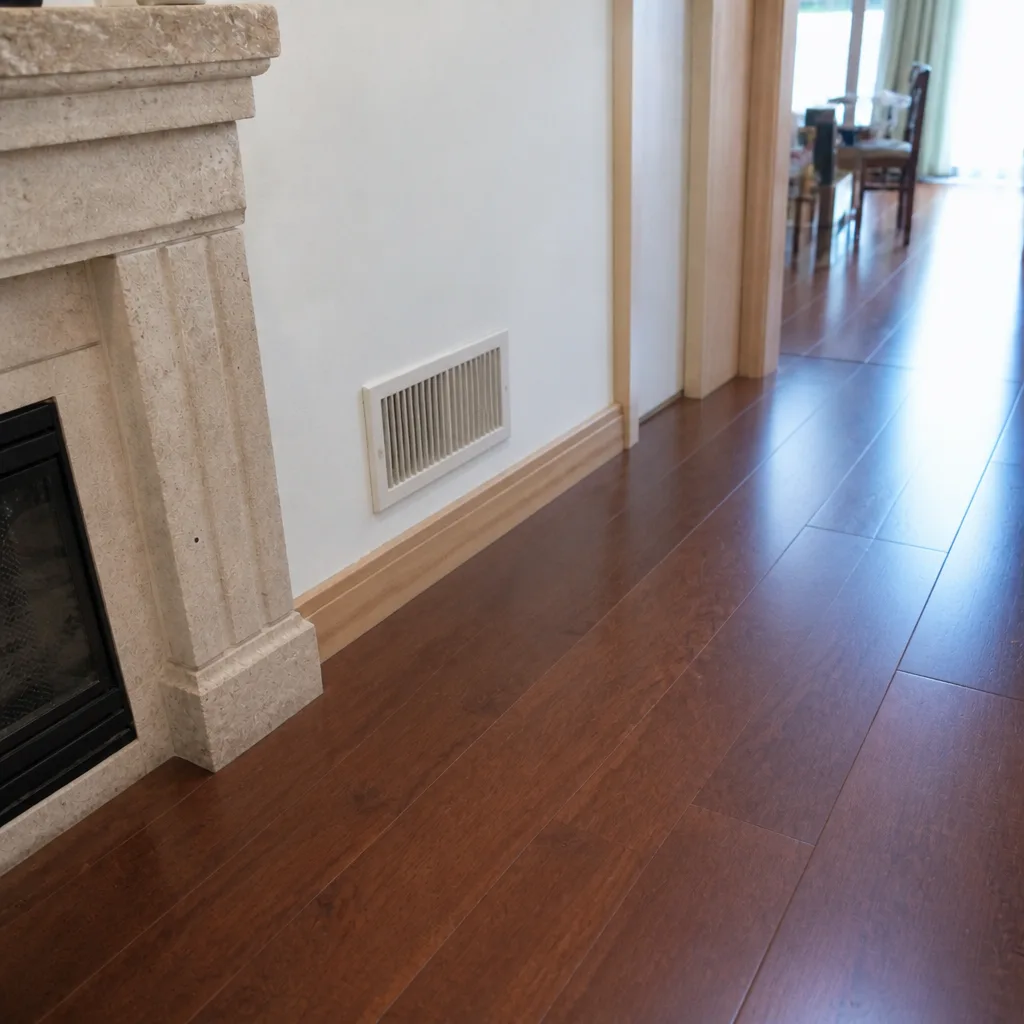 After
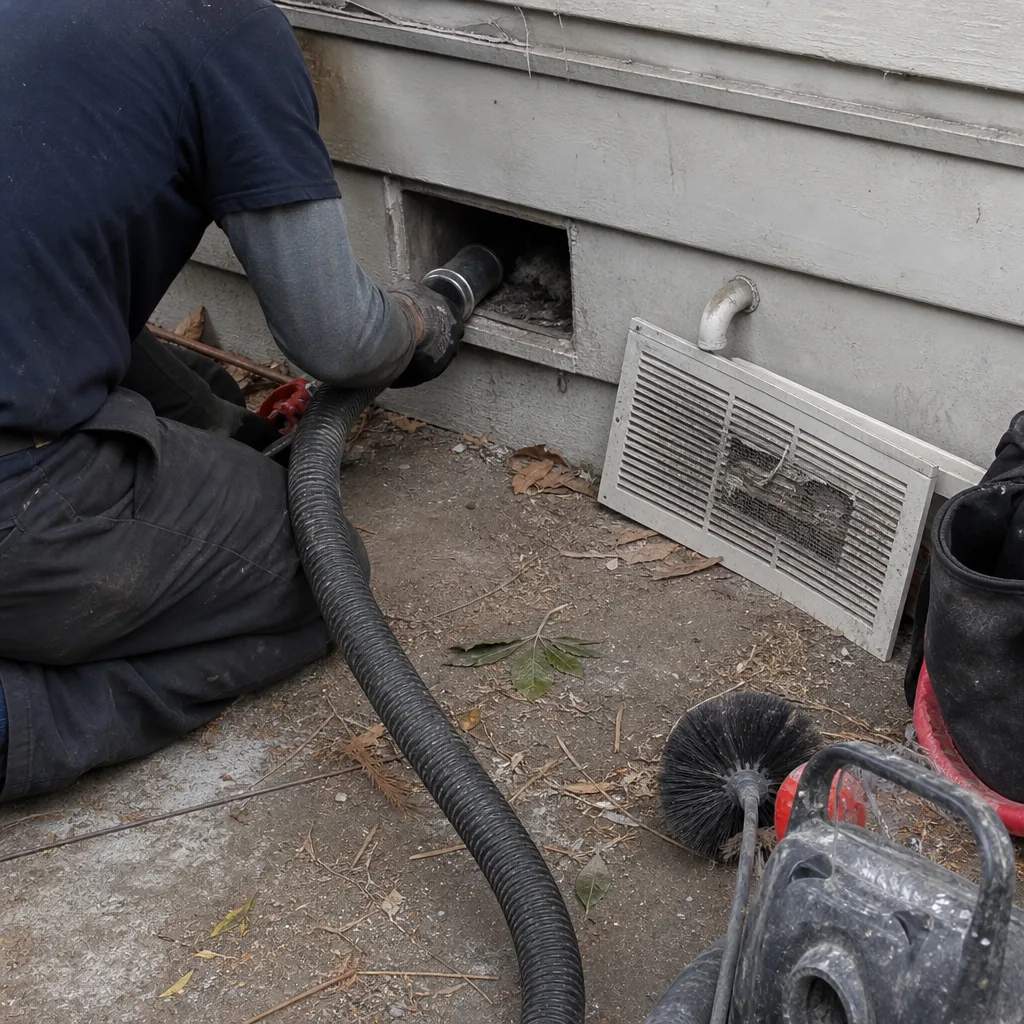 Before
 After
 Before
 After
When to Call a Professional
Call a professional when the smell or symptoms point to the ductwork and cleaning the registers doesn’t fix it. If you’ve had allergy flare-ups that get worse indoors, you’ve just finished a renovation, you’ve bought an older Richmond home with an unknown service history, or your HVAC isn’t heating and cooling rooms the way it used to, that’s the point to have the system inspected with proper equipment. If you’ve been through several smoke seasons since the last cleaning, that’s another trigger. The same goes for a dryer vent that hasn’t been cleared, since a clogged vent is a genuine fire hazard, not just a performance issue.
Meadow Air Duct Cleaning offers free estimates in Richmond: call (844) 459-0252. We answer 24/7. Fast dispatch from 7am to 7pm, Sunday through Friday. Estimates are free, and the price is set per job by the written estimate, so you know the total before any work starts.
Frequently Asked Questions
The cost depends on the size and layout of your system, the duct materials, and how much contamination is present, so it’s set per job by a written estimate rather than a per-vent formula. We give you one flat price per system agreed before work starts, and estimates are free. Call (844) 459-0252 for an exact quote.
Cheap quotes are usually cheap because they’re doing contact vacuum cleaning, not source removal: a vacuum head on accessible surfaces while the deep debris stays in the runs. The equipment gap is the whole difference. A quote that doesn’t mention negative pressure, mechanical agitation, or HEPA filtration is telling you what it is. Call (844) 459-0252 to talk through what a full source-removal job involves for your home.
Ask for before-and-after photos from inside your own system. Any real cleaning can document what was removed, and stock photos or a verbal assurance don’t count. We photograph the system before and after so you see your own ducts. Call (844) 459-0252 to book an estimate.
Clean-looking registers say almost nothing about the rest of the system. Dust and moisture issues sit deep in the runs, in the branch lines, and in the air handler, far from the visible grilles. A camera inspection is the only way to know what’s actually in there. Call (844) 459-0252 to arrange one.
Yes. Air duct repair is a separate service we offer, so if an inspection finds disconnected joints, crushed flex duct, or deteriorated lining, the same visit can identify it and the repair can be scheduled. Cleaning-only companies typically can’t do this. Call (844) 459-0252 to discuss what you’re seeing.
It depends on the home, but the marine layer, older housing stock, and wildfire smoke seasons add load that a fixed three-to-five-year schedule doesn’t account for. Recent renovations, pets, allergies, and a heavy smoke season all reset the clock. Let an inspection set the schedule for your house. Call (844) 459-0252 for a free estimate and a clear recommendation.
The Bottom Line
Richmond ductwork is shaped by a specific set of conditions: the marine layer that keeps moisture hanging around, older housing with flex and fiberglass-lined systems that need careful handling, and smoke seasons that leave particulate most cleaning schedules ignore. The right response is source-removal cleaning with professional-grade equipment, mechanical agitation, HEPA capture, and negative-pressure containment, plus the ability to repair the system when cleaning reveals a structural problem. Professional-grade equipment, not consumer shortcuts, is what actually clears a Richmond system. If you’re not sure where your home stands, start with a free estimate and a straight look inside the ducts.
Ready to get answers? Call (844) 459-0252. We answer 24/7. Fast dispatch from 7am to 7pm, Sunday through Friday. Estimates are free, the price is set per job by the written estimate, and you’ll see before-and-after photos of your own ductwork.
Written by the team at Meadow Air Duct Cleaning.