
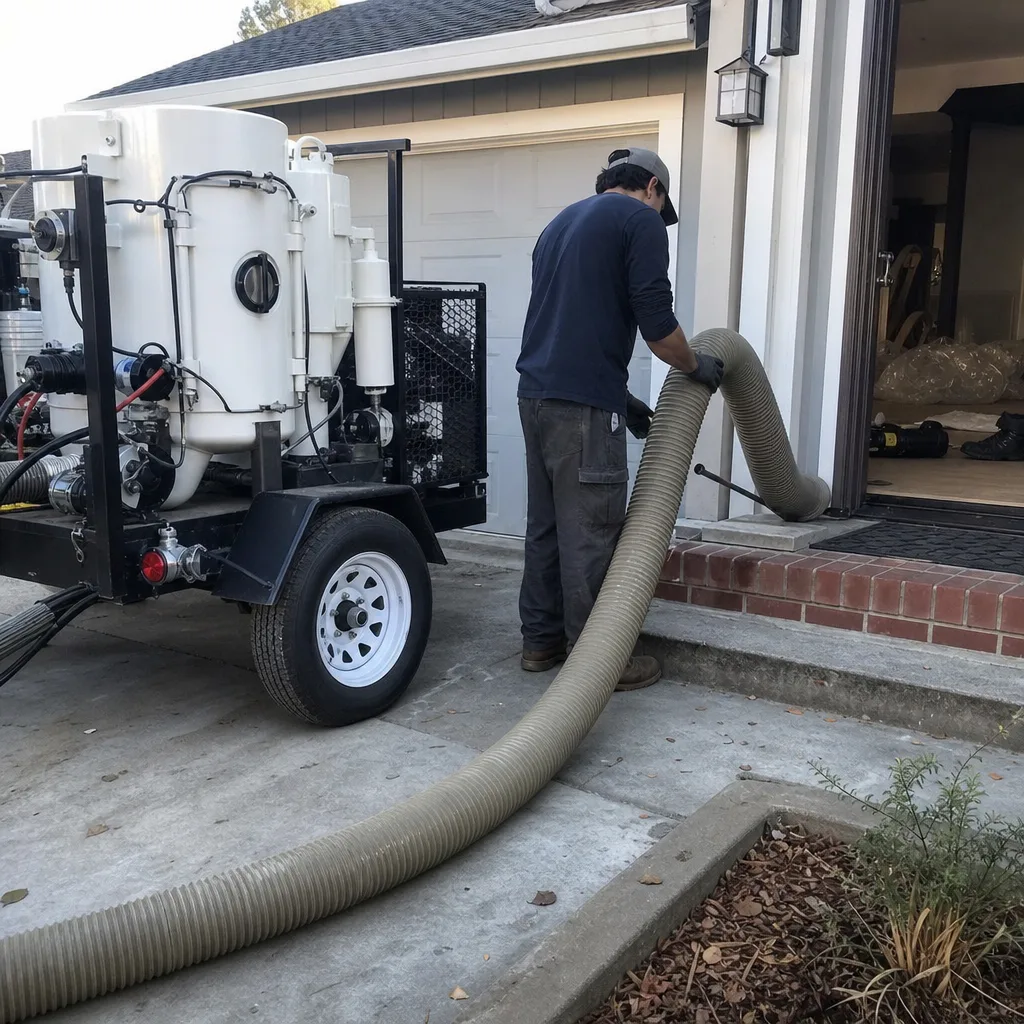
Last updated November 15, 2026
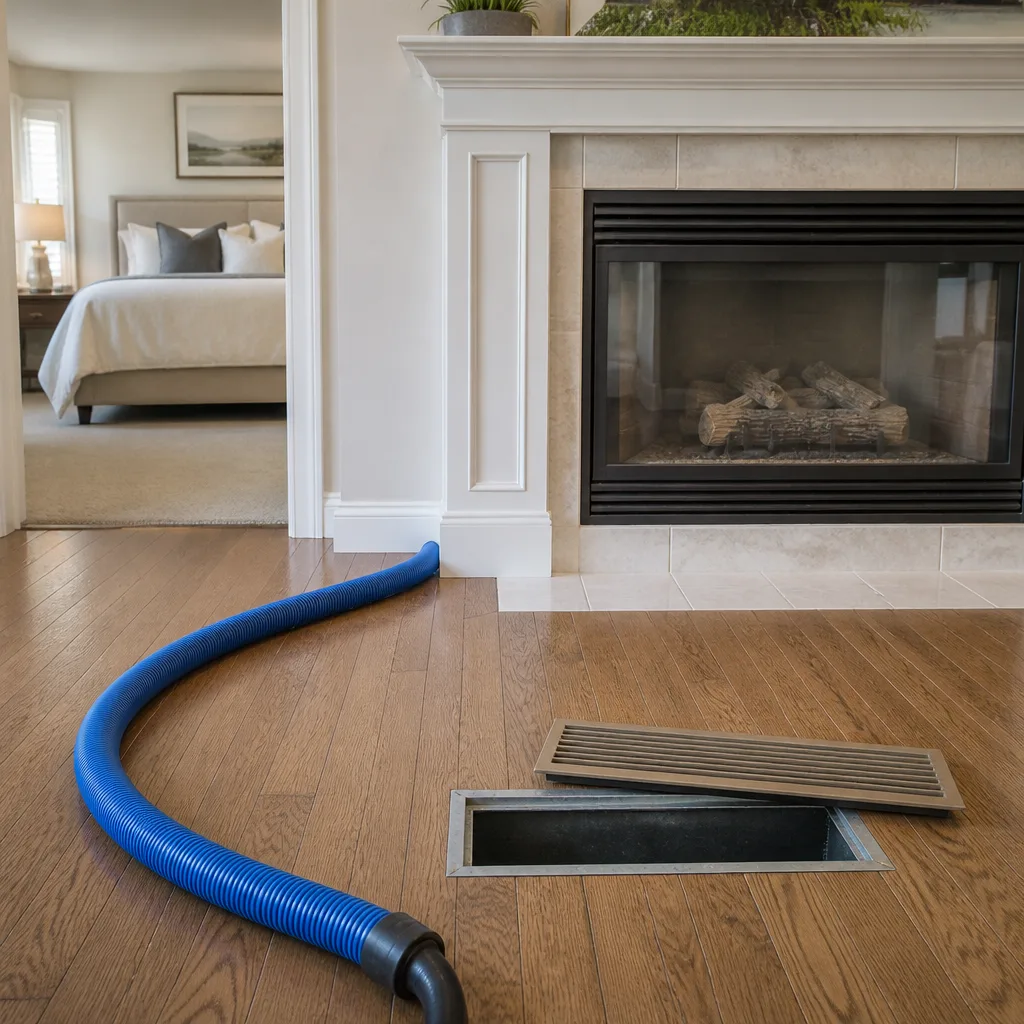 Whole-home duct cleaning
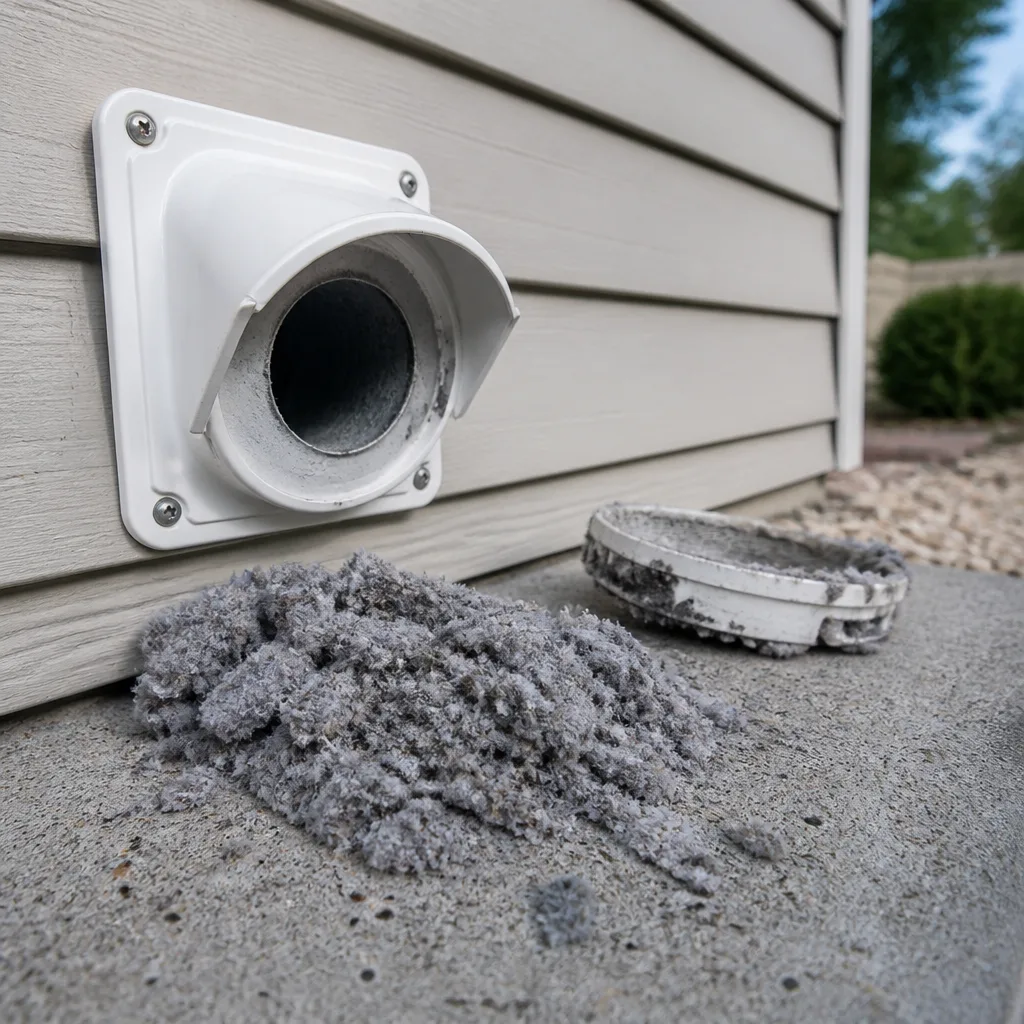 Dryer vent cleaning
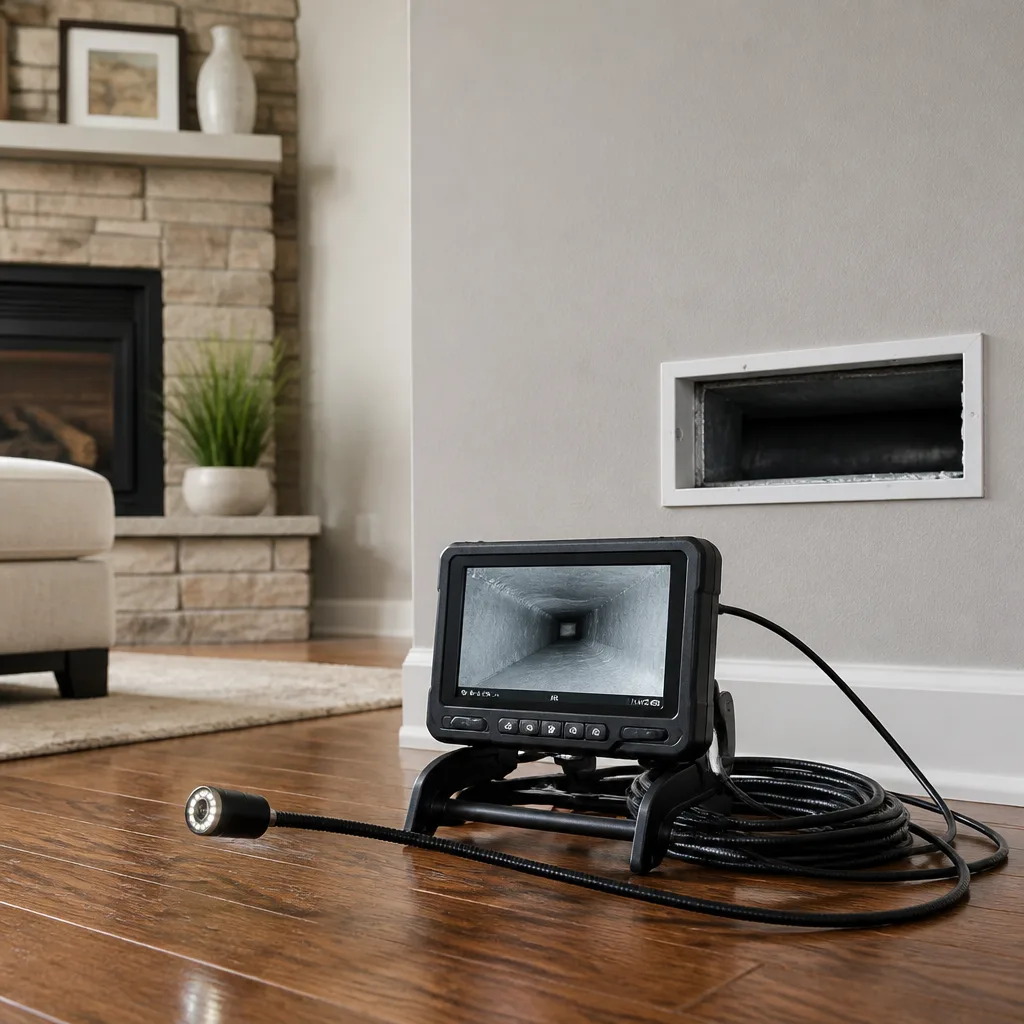 Camera inspection
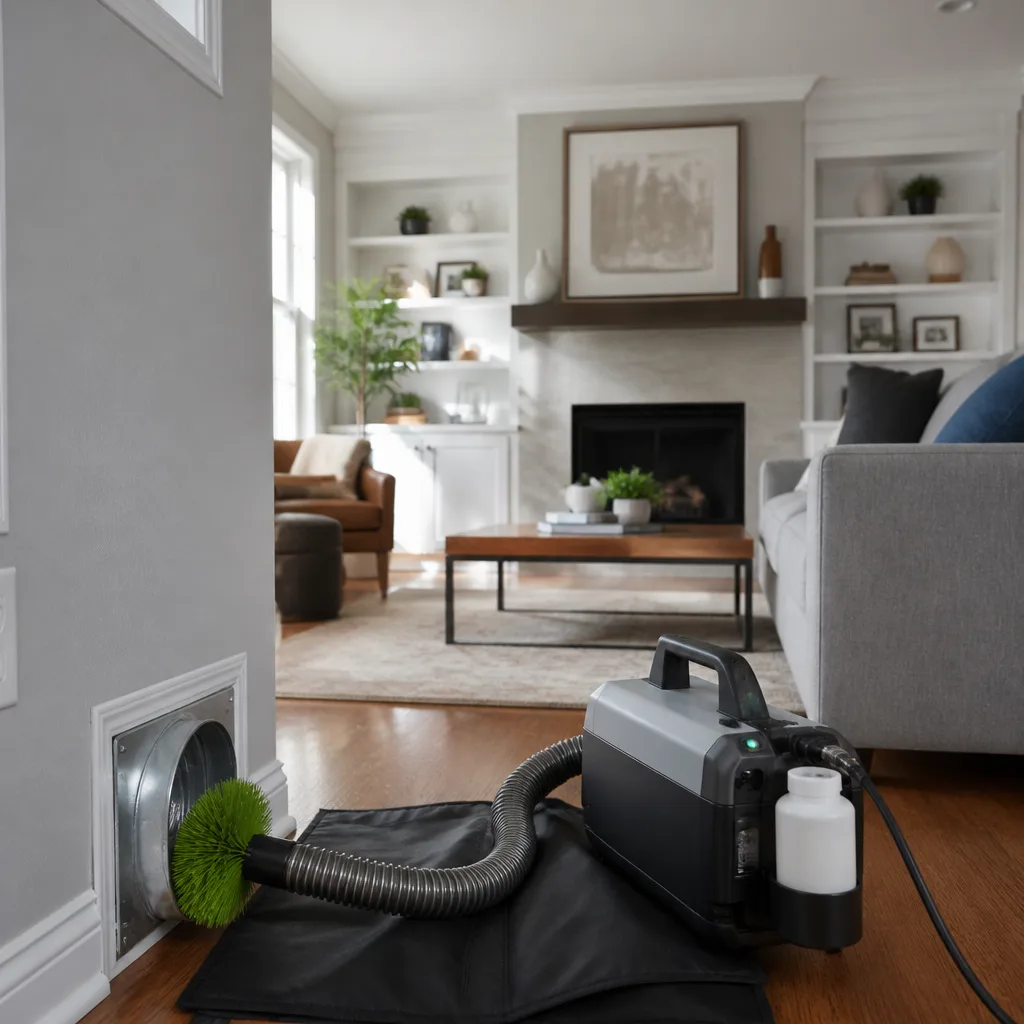 Sanitizing & deodorizing
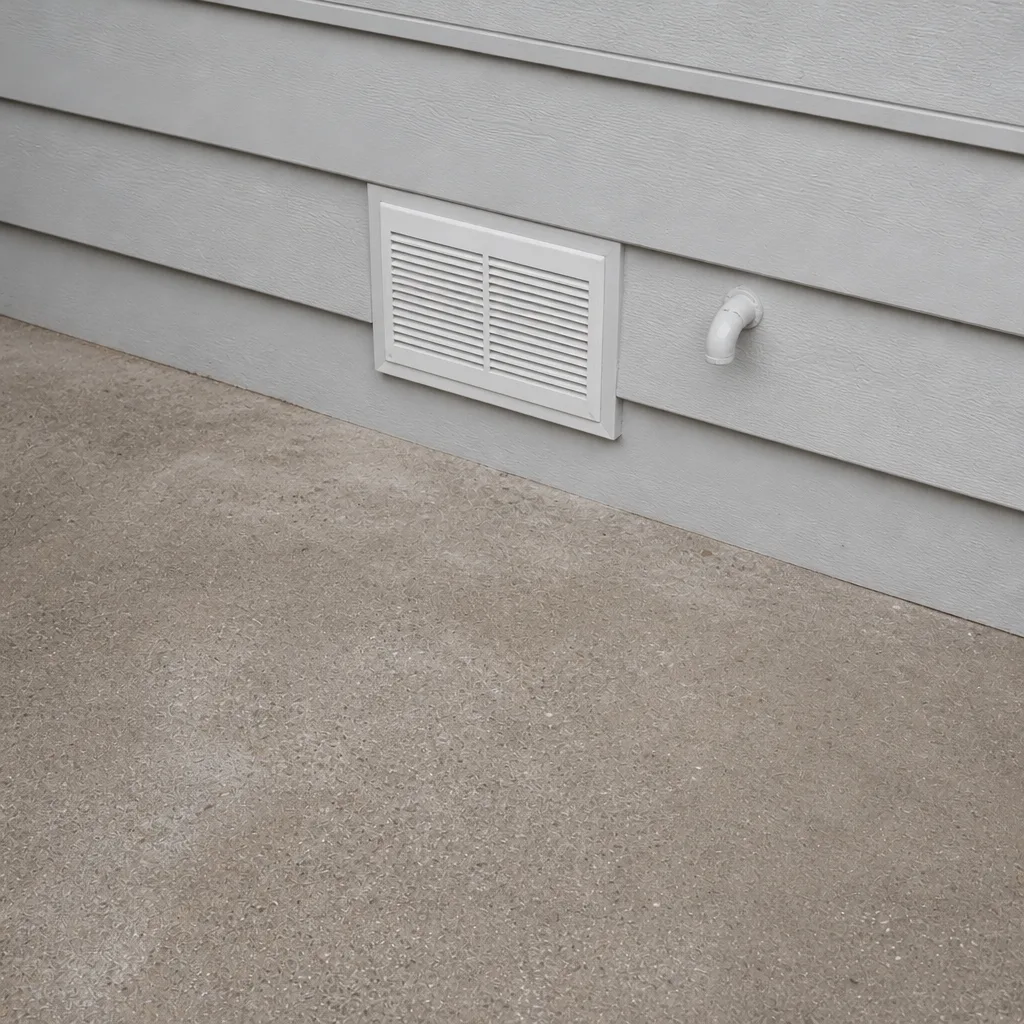
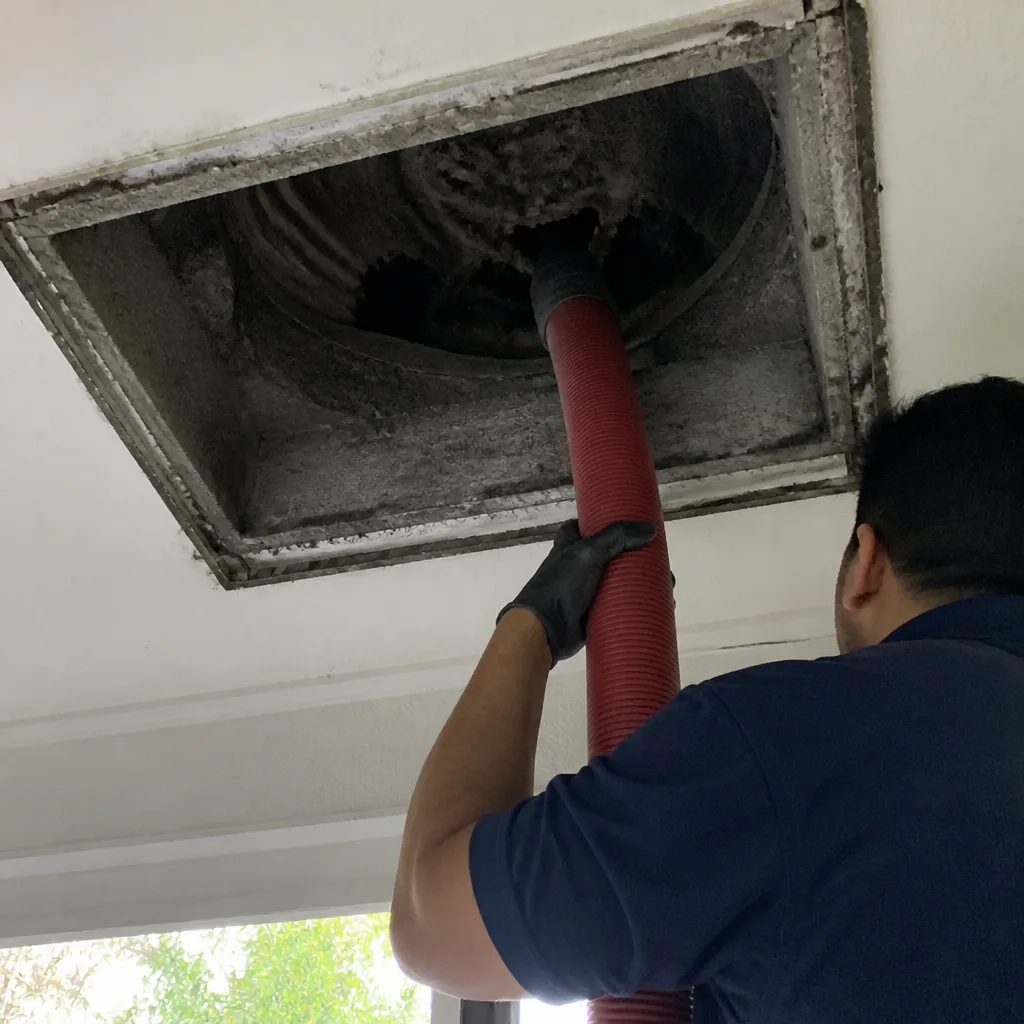
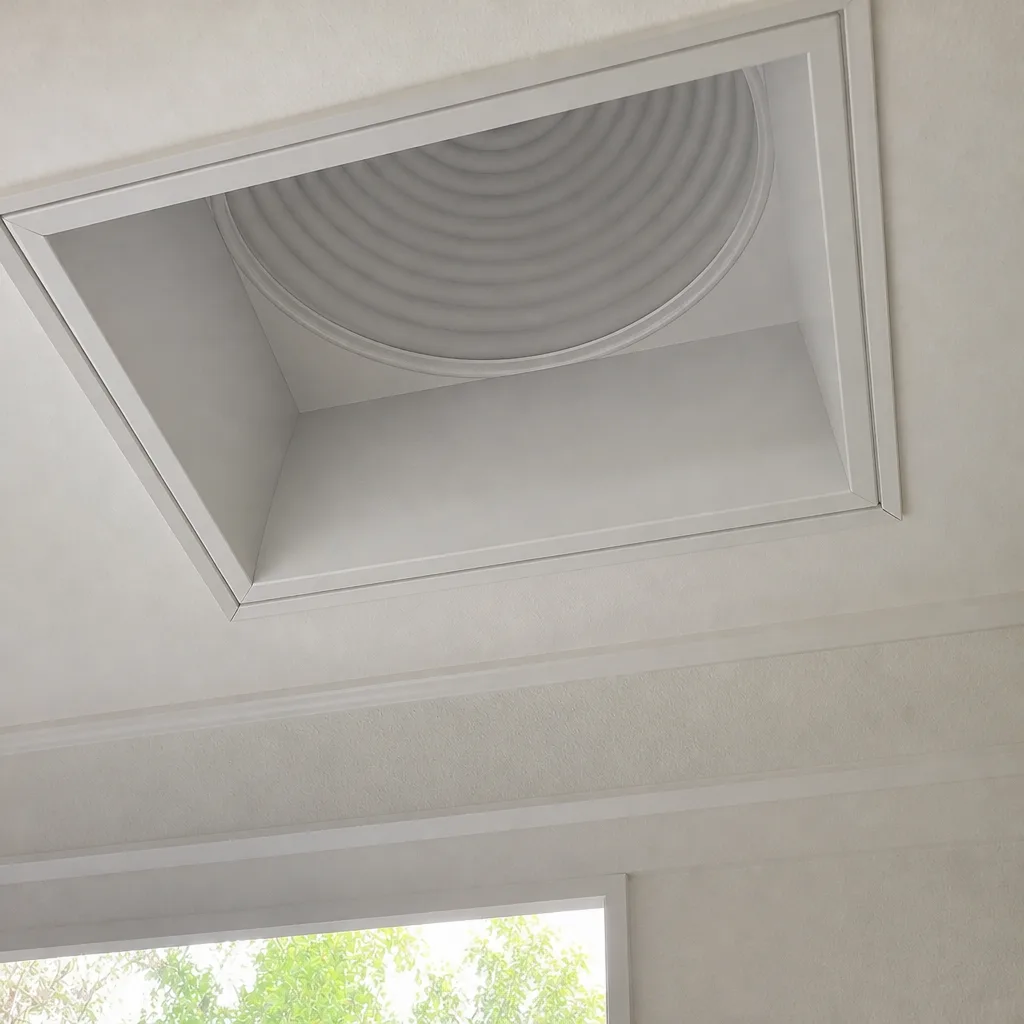
Whole-system duct and dryer vent check with before-and-after photos - you see exactly what came out of your vents
That "$99 whole-house special" is a bait ad - the real number appears once they are in your hallway, or the "clean" is a shop-vac at the register. We photograph the inside of your ducts before and after instead.
DIY vs Professional Air Duct Cleaning: The Richmond Homeowner’s Decision Guide
A shop vac and a dryer brush can genuinely improve airflow at an accessible register. That part is true, and we’ll defend anyone who wants to try it. The same tools pointed at a main trunk line without negative pressure containment do the opposite of what you intended: they push debris deeper into the system and stir fine particles into the rooms you live in. So the useful question isn’t “can I clean my ducts myself?” It’s “which parts of my ductwork can I safely handle, and where does the line fall?” This guide answers that for Richmond homes specifically, where older housing stock and fiberglass-lined interiors change the math.
Quick Answer
DIY air duct cleaning works for surface-level and easy-reach spots: registers, grilles, and dryer vent lint near the outside flap. It stops working at the main trunk lines, the air handler compartment, and any duct run with mold, rodent, or heavy dust buildup, because those require source-removal equipment with real negative pressure to extract contamination rather than redistribute it. For most Richmond homes, the smart approach is DIY maintenance on the accessible surfaces between professional cleanings, not DIY on the whole system.
Styles & brands we work with
- Whole-home duct cleaning
- Dryer vent cleaning
- Camera inspection
- Sanitizing & deodorizing
Table of Contents
- What DIY Can Legitimately Handle
- Where DIY Fails: The Components That Require Professional Equipment
- Why Richmond’s Older Housing Stock Complicates DIY Cleaning
- The Contamination Redistribution Risk, Explained
- What Professional-Grade Equipment Actually Does Differently
- How to Combine DIY and Professional Cleaning
- The Air Handler Compartment: A Case Study in Why This Line Matters
- Cleaning vs Repair: What Happens When the Ducts Are Actually Broken
What DIY Can Legitimately Handle
There’s real value in the parts of your duct system you can reach by hand. Register cleaning and grille vacuuming are the obvious ones, and they’re the jobs where a homeowner with the right attachment can genuinely match what a technician would do. The trick is using tools that lift material without grinding it into the duct wall or scraping the finish.
- Supply and return register covers: pop them off, wash them in the sink or outside with a hose, dry them fully before reinstalling. Loose dust and pet hair lift easily and there’s nothing to damage.
- The visible interior of the register boot: the first few inches of duct behind the grille can be reached with a vacuum brush attachment. This is where most of the visible dust collects anyway.
- Return air plenum surfaces you can see from the grille: if you can look in with a flashlight and see the surface, you can vacuum what’s loose without touching the duct material.
- Dryer vent cleaning from the dryer side: pulling the flexible transition duct off the back of the dryer and clearing the lint trap housing is a genuine DIY win, and one of the highest-value things a homeowner can do for fire safety in Richmond.
- Outdoor dryer vent flap: clearing lint from the exterior hood and flap is quick, cheap, and easy to overlook.
What makes those jobs effective is using a vacuum with a soft brush attachment and a shop vac with a good filter, not a leaf blower or compressed air. The tools that cause problems are the ones that move air without capturing debris: high-pressure blowers, compressor nozzles, and anything that “just loosens things up” without a capture point. Those are also the tools that turn a DIY afternoon into a professional call.
Tools that help versus tools that hurt
- Help: a wet/dry shop vac with a HEPA or fine-particulate filter and a soft brush nozzle.
- Help: a microfiber cloth and a spray bottle of mild cleaner for register covers.
- Help: a dryer vent brush kit (the flexible coil kind) for the short run between the dryer and the wall.
- Hurt: compressed air, leaf blowers, and shop vacs without a filter, which aerosolize fine dust into the room.
- Hurt: abrasive wire brushes and anything stiffer than the duct lining.
- Hurt: any tool that pushes air into the system instead of pulling it out.
If you’ve looked into air duct cleaning before, you’ve probably seen “DIY duct cleaning” tutorials that start with a shop vac and end with a suggestion to “blow out the lines.” That last step is where the trouble starts. We’d rather you stop at the register and leave the trunk lines alone.
Where DIY Fails: The Components That Require Professional Equipment
Three parts of a residential system are genuinely off-limits to DIY cleaning: the main trunk lines, the air handler compartment, and any duct section with visible mold, rodent activity, or heavy dust accumulation. Not because homeowners can’t physically reach them, but because cleaning them without source-removal equipment with proper negative pressure containment does more harm than good.
The main trunk lines
Trunk lines are the large rectangular or round runs that carry conditioned air from the air handler to the branch ducts. They’re long, they’re often inaccessible from the register end, and they collect debris in ways that aren’t visible from below. A rotary brush system like the Rotobrush tools we use agitates the duct wall while a HEPA vacuum pulls everything out at the same time. A shop vac at a register pulls almost nothing from the far end of a 20-foot trunk. It just moves the loose dust around, and eventually the HVAC fan delivers it back into your living room.
The air handler compartment
The air handler compartment is where the blower, evaporator coil, and filter live. It’s also the single dirtiest part of most duct systems, and the one part where DIY mistakes are expensive. Bending coil fins, dislodging wiring, or knocking a drain pan out of position turns a $0 afternoon into a service call. There’s also an electrical safety element: the air handler compartment contains line voltage components. We recommend leaving it to a trained technician every time.
Any section with mold or rodent contamination
If you can see discoloration, smell a persistent musty odor, or find droppings, that section needs professional containment, not a shop vac. Cleaning mold or rodent-contaminated ductwork without containment spreads spores and particles through the house. Restoration-grade equipment, including negative air machines like the Abatement Technologies units we run, exists specifically for this reason.
Why Richmond’s Older Housing Stock Complicates DIY Cleaning
Richmond’s housing stock spans more than a century of construction, and that affects what’s inside the walls. Homes in neighborhoods like Point Richmond, North and East, and the older streets off Barrett Avenue and 23rd Street frequently have duct systems that were installed or retrofitted decades apart, often in stages as the house was updated. That history shows up in duct interiors, and it changes what a DIY tool will do once it’s inside.
Fiberglass-lined duct interiors
Many Richmond homes have ductwork with interior fiberglass acoustic lining, especially in systems installed or updated during the 1970s and 1980s. That lining is soft. An abrasive brush, a stiff nozzle, or aggressive pressure can tear it, and once the lining is torn, the duct becomes a trap for dust and a source of fiberglass particles in the supply air. Professional rotary brush systems are used with variable pressure and the right brush type specifically because lining damage is a known risk. A homeowner doesn’t have that control.
Flex duct connections
Flex duct is common in Richmond basement, crawlspace, and attic runs. The connections at each fitting are typically secured with zip ties or mastic and are not designed to be pulled on. Any significant cleaning attempt, DIY or otherwise, can loosen a connection, and a loose flex connection leaks conditioned air into the crawlspace or attic instead of into the room. In our experience, the technician’s job on a flex-heavy system often includes reconnection work after the cleaning, not just the cleaning itself.
Compound and layered systems
Older Richmond homes frequently have mixed duct systems: rigid galvanized in the main portion, flex in the branches, sometimes transitions the original installer improvised. These compound systems need to be assessed before any cleaning, professional or DIY. That’s one reason we start every job with a walkthrough, so we can see what’s actually connected before any brush or vacuum goes in.
Richmond’s mild climate is also relevant. Because the heating season is short and mild, many homes run the furnace fewer hours than in colder regions, which means dust accumulates in the ducts and gets distributed over a longer calendar period rather than being flushed through by heavy use. We see systems with more settled dust than the calendar would suggest. Our Richmond service overview covers how we approach homes in different neighborhoods.
The Contamination Redistribution Risk, Explained
Here’s the part that makes the DIY-versus-professional question matter more than people expect. A vacuum without adequate negative pressure doesn’t remove contamination. It moves it. And in a duct system, “moving it” usually means pushing it further in and then circulating it through the house every time the HVAC runs.
How contamination redistribution happens
- You put a shop vac at a register and start pulling. Airflow from that register moves a small amount of loose dust, but the pressure drop doesn’t reach the far end of the trunk.
- You move to a trunk line and use compressed air or a blower. That’s when the problem gets real. Loose dust goes airborne inside the duct.
- Without a negative air machine pulling from the far end and a HEPA capture at the source, the duct system is now dirtier than it was before you started.
- You turn the HVAC back on and the fan delivers that redistributed dust through every supply register in the house, over the course of days or weeks.
That’s the mechanism behind the “we clean and the ducts feel dirtier afterward” phone calls we occasionally get from homeowners who tried a DIY run first. It’s not imagination and it’s not a duct problem that existed before you started. It’s the redistribution.
Why professional containment solves it
Proper duct cleaning uses source-removal negative pressure. A HEPA-rated vacuum like the Nikro systems we run pulls a continuous negative pressure on the duct system while an agitating tool (rotary brush, air whip, or similar) loosens material from the walls. Debris is captured at the vacuum, not pushed into the room. The Abatement Technologies negative air machines we use add a containment layer for jobs where mold, rodent, or heavy contamination is present. Equipment built for remediation professionals, brought to a residential job, is what’s happening when this is done right.
The right way to think about it: you don’t clean a duct system by moving dirt from one side to the other. You clean it by creating a pressure differential that carries contamination out of the system and into a capture unit. DIY equipment can’t create that differential. That’s the dividing line between a job that helps and one that makes things worse.
What Professional-Grade Equipment Actually Does Differently
The difference between a professional duct cleaning and a DIY attempt isn’t the names on the equipment. It’s the pressure differential, the capture rate, and the ability to inspect and repair what turns up once the ducts are open. Here’s what that looks like in practice.
- Rotary brush extraction: a Rotobrush-style system runs a rotating brush through the duct while a HEPA vacuum pulls debris out at the same end. The brush agitates, the vacuum captures. Both happen at the same time. A shop vac does neither well on its own.
- HEPA-rated capture: Nikro HEPA vacuums are designed to hold fine particles (including the ones small enough to trigger allergy symptoms) inside the unit. A shop vac without a HEPA filter exhausts fine dust back into the room. That’s the opposite of what most homeowners want when they first call about allergies.
- Negative air pressure containment: Abatement Technologies negative air machines pull air out of the workspace and filter it before release. On jobs with mold or rodent contamination, containment is not optional.
- Air quality systems integration: many Richmond homes have Honeywell or Aprilaire filtration or humidification systems installed at the air handler. Cleaning a duct system without understanding what’s connected to it risks damaging or bypassing the air quality equipment. We’ve worked with both brands long enough to service and clean around them.
- Repair capability: cleaning reveals problems. Loose connections, torn interior lining, disconnected flex runs, and crushed branch ducts are the most common ones we find. We handle dryer vent cleaning and duct repair as separate services precisely because these problems don’t fit inside a cleaning visit.
The combined value is this: professional equipment doesn’t just clean what’s already there. It gives a technician the ability to see what’s going on inside the duct system and fix it on the spot, rather than handing the homeowner a list of “we found this but can’t help with it.” We clean it. If it’s broken, we fix it.
How to Combine DIY and Professional Cleaning
The most effective strategy for most Richmond homeowners is a hybrid: DIY on the accessible surfaces, professional on the full system, and a documented maintenance rhythm in between. Here’s what that looks like in practice.
- Register cleaning every few months. Pop the covers, wash them, vacuum the visible boot. This is genuinely useful and takes under an hour for a whole house.
- Dryer vent check between professional visits. Pull the transition duct, clear lint, and check the outside flap. Do this at least twice a year.
- Professional full-system cleaning on a schedule that matches your home. For most Richmond homes, every two to four years is reasonable, sooner after renovations, a move into an older home, or if there are pets or allergy concerns. A home with a recent pet addition or a recent remodel needs a professional cleaning sooner than the calendar suggests.
- Document what you notice between visits. Note when airflow at specific registers drops, when dust reappears quickly after cleaning, when you smell something musty. That record helps a technician assess whether you’re seeing normal accumulation or a problem.
- Take before-and-after photos of every professional cleaning. Ask for them and keep them. A technician with proper equipment will show you what came out of the system. Before-and-after photos are also the single most useful way to compare one cleaning to the next.
What to document for a contractor
- Photos of registers before and after any DIY cleaning.
- Notes on airflow changes (which registers feel weaker, when it started).
- Any smells: musty, chemical, or “dirty sock” odors when the HVAC starts up.
- Dates of recent renovations, HVAC changes, or filter replacements.
- Whether the home has pets, and how many.
If you’ve had HVAC work done recently, mention it. Air handler modifications, coil replacements, or new filtration systems all affect how a cleaning should be approached. If you’re comparing cleaners, ask what equipment they use and whether they can do repair work. If they can’t tell you the equipment, that’s your answer.
The Air Handler Compartment: A Case Study in Why This Line Matters
The air handler compartment is the single part of a residential duct system where the DIY-versus-professional line is clearest. It’s also the part most homeowners don’t think about, because it’s inside a closet or mechanical space and not visible from any register.
The compartment contains the blower motor, the evaporator coil, the filter slot, the drain pan, and a surprising amount of electrical gear. It’s also where the most dust, mold, and debris accumulate, because every cubic foot of air the system moves passes through it. Cleaning it requires opening a sealed compartment, which means working around live electrical components and frequently around a condensate drain that will be full of water. Bending coil fins, knocking the drain pan out of position, or dislodging wiring turns a routine cleaning into a service call, and worse, into a call about a system that’s now drying out the ceiling below it.
Professional cleaning of the compartment involves proper containment, HEPA capture, and enough familiarity with the equipment to know what shouldn’t be touched. We also check for the parts of the compartment that fail silently: filter bypass, drain pan buildup, and coil fouling. Those aren’t cleaning tasks. They’re diagnostic findings that only show up when someone’s actually in the compartment.
There’s also an electrical safety element that we want to be explicit about. The air handler compartment contains line voltage components. We recommend leaving it to a trained technician rather than a homeowner with a shop vac and a flashlight. This isn’t caution for caution’s sake; it’s the reality of what’s inside the compartment.
Cleaning vs Repair: What Happens When the Ducts Are Actually Broken
One of the reasons we emphasize the DIY-versus-professional question is that a professional cleaning sometimes reveals repair needs that a DIY attempt never would have surfaced. That’s not a sales tactic. It’s a description of what actually happens once a trained technician opens the system and looks inside.
The most common findings in Richmond homes
- Loose or disconnected flex duct at branch fittings, especially in attic and crawlspace runs.
- Compressed or crushed flex duct where a joist, pipe, or duct support has settled onto it.
- Torn interior fiberglass lining in older rigid duct runs, sometimes from a previous DIY attempt with an abrasive brush.
- Missing or damaged access panels at the air handler or trunk transitions.
- Duct runs that were added for a renovation and never properly sealed or reconnected.
Each of those affects airflow and indoor air quality. Cleaning a duct system with a disconnected branch doesn’t fix the branch; it just leaves you with a cleaning report that says “system has disconnected branch duct” and a recommendation to repair it. That’s why we offer duct repair as a standalone service. Cleaning-only companies can’t do that work, which means a homeowner in Richmond with a broken system ends up calling a second contractor. The three services we offer (air duct cleaning, dryer vent cleaning, and duct repair) exist because these problems come up together on the same job.
Your dryer vent is a fire hazard waiting to be cleared
While we’re on the topic of DIY versus professional: dryer vent cleaning is the one duct service where the DIY/professional line falls in an unusual place. Short accessible runs behind the dryer are legitimately DIY. Longer runs through walls, up through the roof, or with multiple elbows and flap housings often aren’t. Lint accumulation in those runs is a real fire risk, and a technician with the right brushes and airflow meter can confirm the vent is genuinely clear, not just clear at the accessible end. If it’s been more than a year since your dryer vent was cleaned, or if drying times have crept up, that’s a reason to call rather than reason to keep trying with a vent brush.
If you want to see how all three services fit together, our Meadow Air Duct Cleaning overview covers the full picture. Our technicians have up to 15 years of experience with this equipment and with the systems these older Richmond homes actually have.
Common Mistakes to Avoid
- Blowing air into the duct system to “loosen” debris. This is the single most common DIY mistake, and it directly causes the redistribution problem described above. Loose dust that reaches the air handler compartment or the living space is harder to remove than the dust that was already settled in the duct.
- Using an abrasive brush on fiberglass-lined ductwork. Common in Richmond homes built or updated in the 1970s and 1980s, interior lining is soft and tears easily. Once torn, the duct traps dust and releases fiberglass particles into the supply air.
- Opening the air handler compartment without electrical knowledge. The compartment contains line voltage equipment and a condensate drain. It’s not a DIY zone. We recommend a trained technician for anything inside that enclosure.
- Cleaning one part of the system and assuming the rest is fine. A cleaned register next to a dirty trunk line doesn’t improve air quality. The system moves air through all of it, which is why professional cleaning addresses the whole system rather than the visible ends.
- Ignoring a musty smell because the ducts “look” clean. Odor usually points to moisture or biological growth in a compartment or duct run that isn’t visible from the register. It’s a reason to call, not a reason to wait.
- Skipping the dryer vent because the ducts were just cleaned. Dryer vents are a separate system with a separate risk profile. A recent duct cleaning doesn’t address lint accumulation behind a dryer, especially in an older Richmond home with a longer, more circuitous vent run.
- Not documenting before-and-after photos. Without photos, you can’t tell whether the cleaning made a difference or whether the shop vac just moved some visible dust around. Before-and-after photos of your own system are the only honest measure of whether the work was done.
See the difference
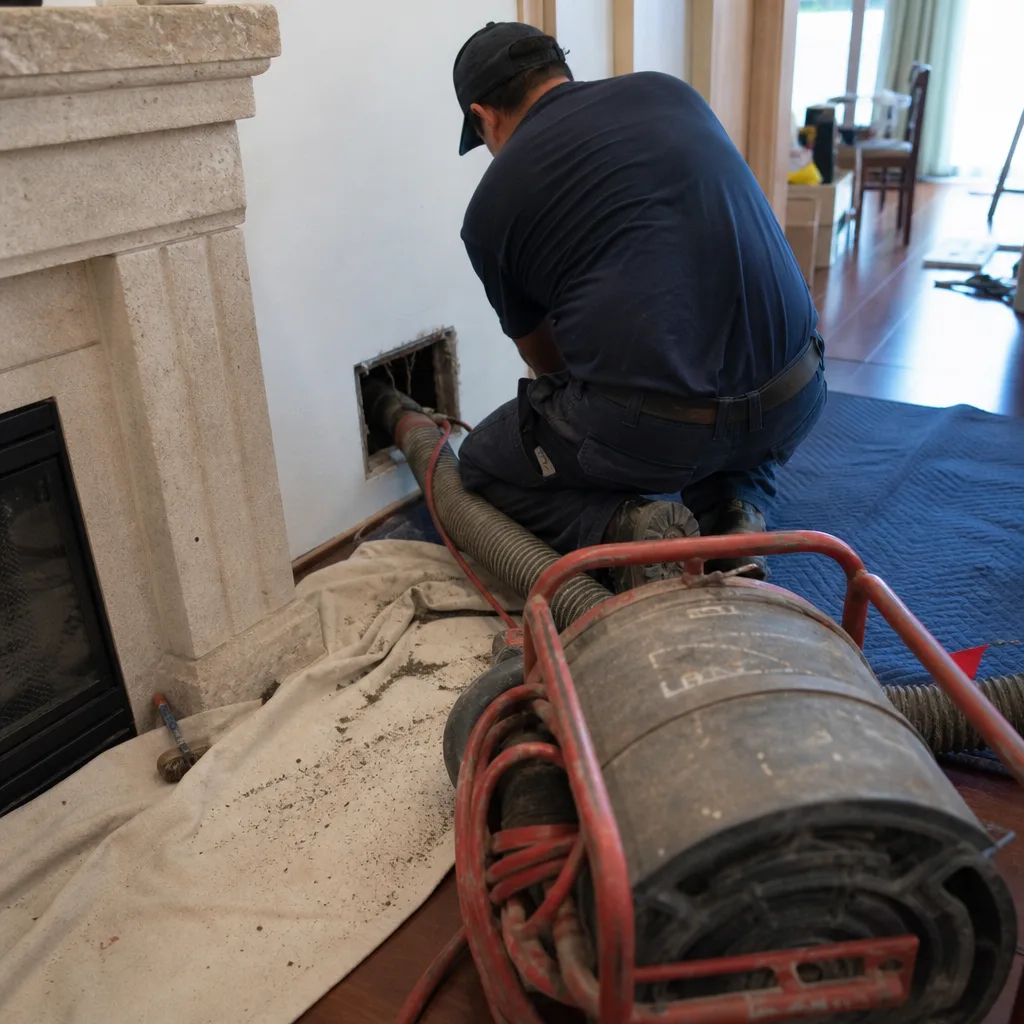 Before
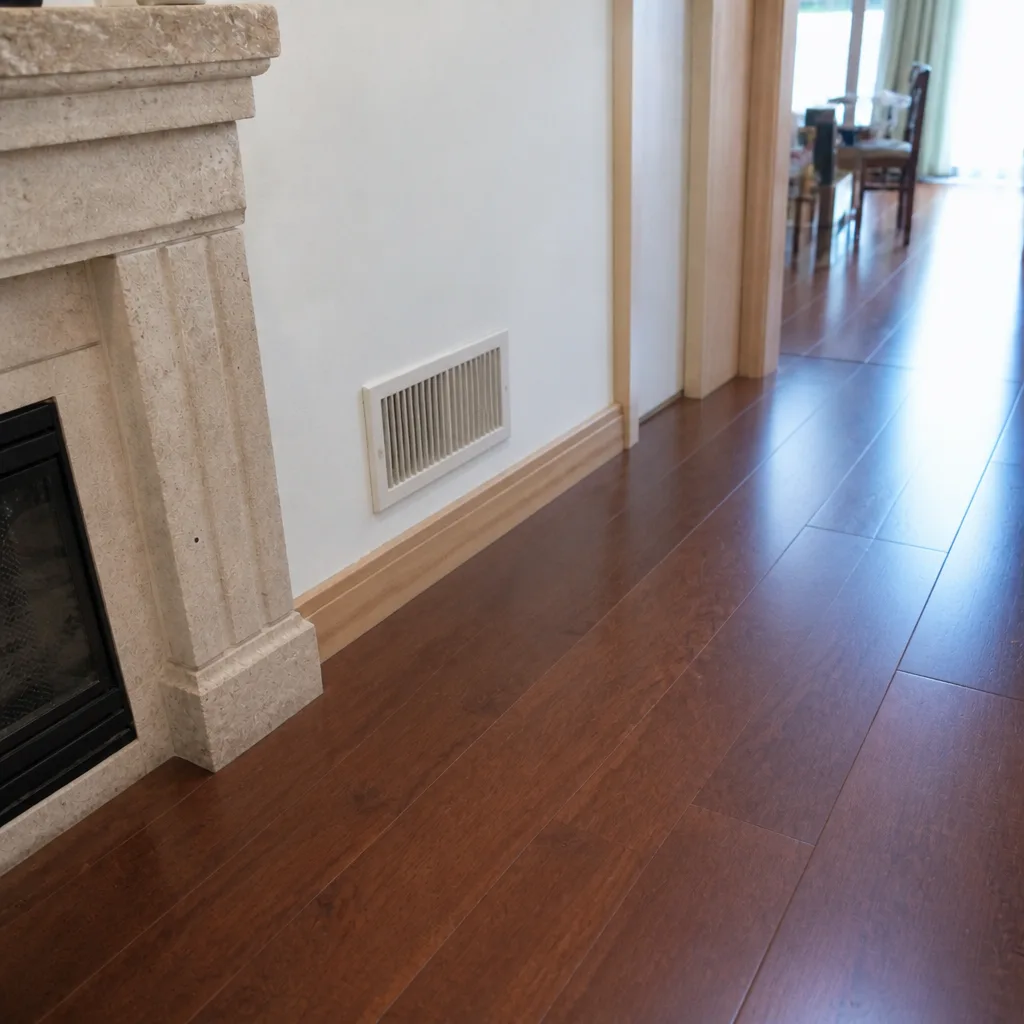 After
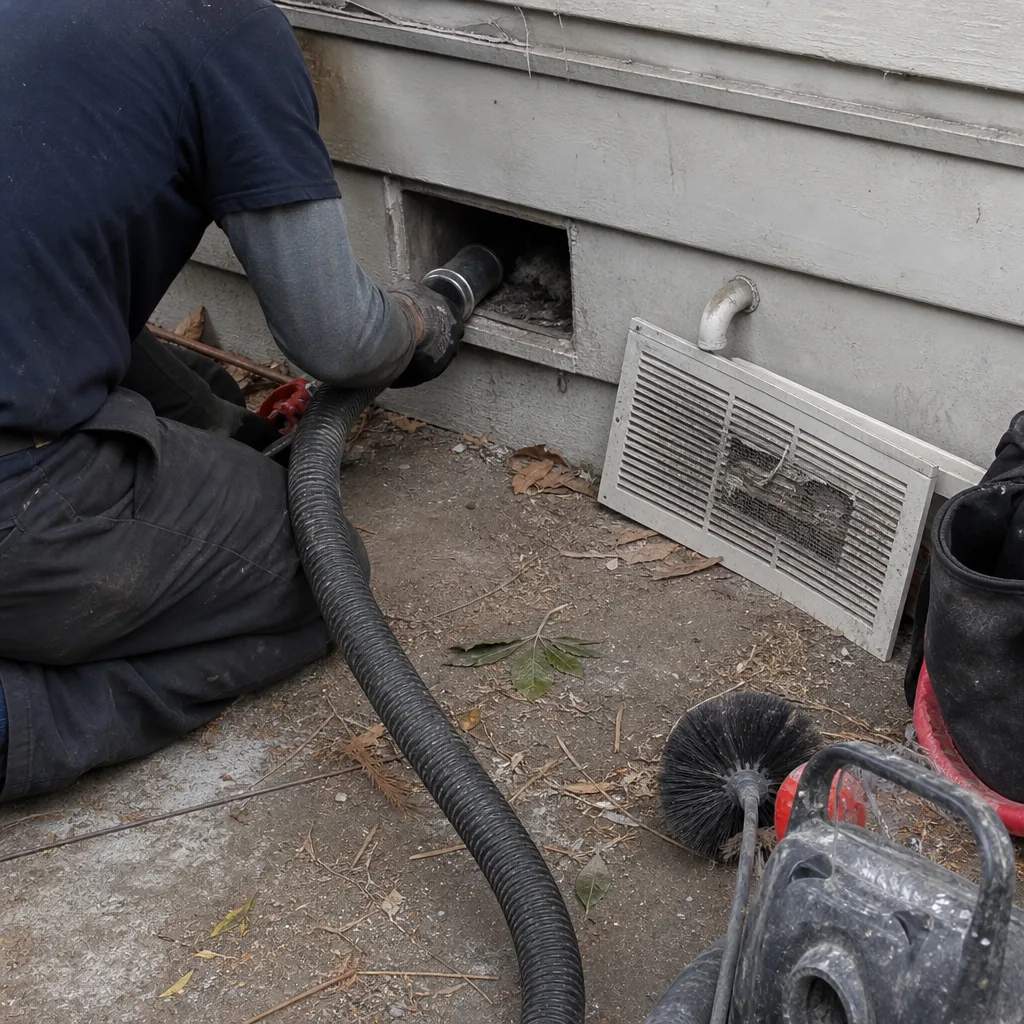 Before
 After
 Before
 After
When to Call a Professional
Call a professional when the answer to any of these is yes: you can see mold or discoloration inside a duct, there’s a persistent musty smell when the HVAC starts, you’ve recently renovated or moved into an older home, someone in the household has allergy or asthma symptoms that seem tied to the HVAC running, or your dryer takes noticeably longer than it used to. Those are the situations where the DIY line has been crossed and the risk of making things worse is real.
If your main question is “how much does it cost to clean the whole system?” or “can you clean and repair in the same visit?”, those are the calls we want to have. Meadow Air Duct Cleaning offers free estimates in Richmond. Call (844) 459-0252. We answer 24/7. Fast dispatch from 7am to 7pm, Sunday through Friday. The price is set per job by the written estimate, so you’ll know exactly what you’re paying before any work starts.
Frequently Asked Questions
You can clean the accessible parts: register covers, the visible boot behind each grille, and the short dryer vent run behind the dryer. You shouldn’t clean the main trunk lines, the air handler compartment, or any duct with mold or rodent contamination, because DIY tools without negative pressure containment redistribute contamination rather than remove it. For most Richmond homes, DIY maintenance on the accessible surfaces between professional cleanings is the right split.
Cheap quotes usually mean cleaning only the register ends without source-removal equipment, or skipping the air handler compartment entirely. What they don’t do is clean the trunk lines and the air handler, which is where most of the contamination actually sits. We charge one flat price per system, agreed before work starts, and we show before-and-after photos of your own ducts so you can see what was done. Call (844) 459-0252 for an exact estimate.
For a typical Richmond home, every two to four years is a reasonable schedule, and sooner if you’ve recently renovated, moved into an older home, added pets, or noticed allergy symptoms that seem linked to HVAC use. Richmond’s mild heating season means dust accumulates over more calendar months per hour of system use, so a home with less heating demand can still build up a surprising amount of settled dust in the ducts. Call us for an estimate if you’re not sure where your home falls.
We recommend against it. The air handler compartment contains line voltage electrical components and a condensate drain that’s often full of water, and bending or dislodging anything inside can turn a cleaning into a repair. Mold assessment inside a duct system is best handled by a technician with inspection tools and proper containment. Call us if you suspect mold and we’ll walk you through the next step.
The most common findings are loose flex duct connections at branch fittings, crushed flex runs where a joist or support has settled onto the duct, and torn interior fiberglass lining in older rigid runs. Richmond’s older housing stock often has duct systems that were installed or extended in different decades, so mixed materials and improvised transitions are common. We handle air duct cleaning and air duct repair as separate services so the same technician team can diagnose and fix what comes up.
Often yes. When we find a disconnected branch or a torn interior lining during cleaning, we can assess whether the repair can happen the same day or needs a return visit. That’s a direct advantage of working with a company that does both cleaning and repair rather than cleaning alone. Call (844) 459-0252 for a free estimate so we can tell you what your system needs before any work starts.
The Bottom Line
DIY duct cleaning isn’t wrong, it’s just narrow. The accessible parts of your system (registers, grilles, the short run behind the dryer) are legitimately yours to clean, and doing that well actually helps the system. The main trunk lines, air handler compartment, and anything with mold or rodent contamination require source-removal equipment with proper negative pressure containment. Richmond’s older housing stock, especially fiberglass-lined duct interiors and flex connections, makes the DIY-versus-professional line clearer than it is in newer homes. Combine the two: DIY on the surfaces, professional on the system, before-and-after photos on every professional visit so you can actually see what happened. And if you’re not sure which side of the line you’re on, call.
Meadow Air Duct Cleaning offers three services under one company: air duct cleaning, dryer vent cleaning, and air duct repair. Our technicians have up to 15 years of experience with professional-grade equipment from Rotobrush, Nikro, and Abatement Technologies, and we work with Honeywell and Aprilaire air quality systems. We use one flat price per system agreed before work starts, and we provide before-and-after photos. To schedule a free estimate in Richmond, call (844) 459-0252. We answer 24/7. Fast dispatch from 7am to 7pm, Sunday through Friday.
Written by the team at Meadow Air Duct Cleaning.