
Last updated November 15, 2026
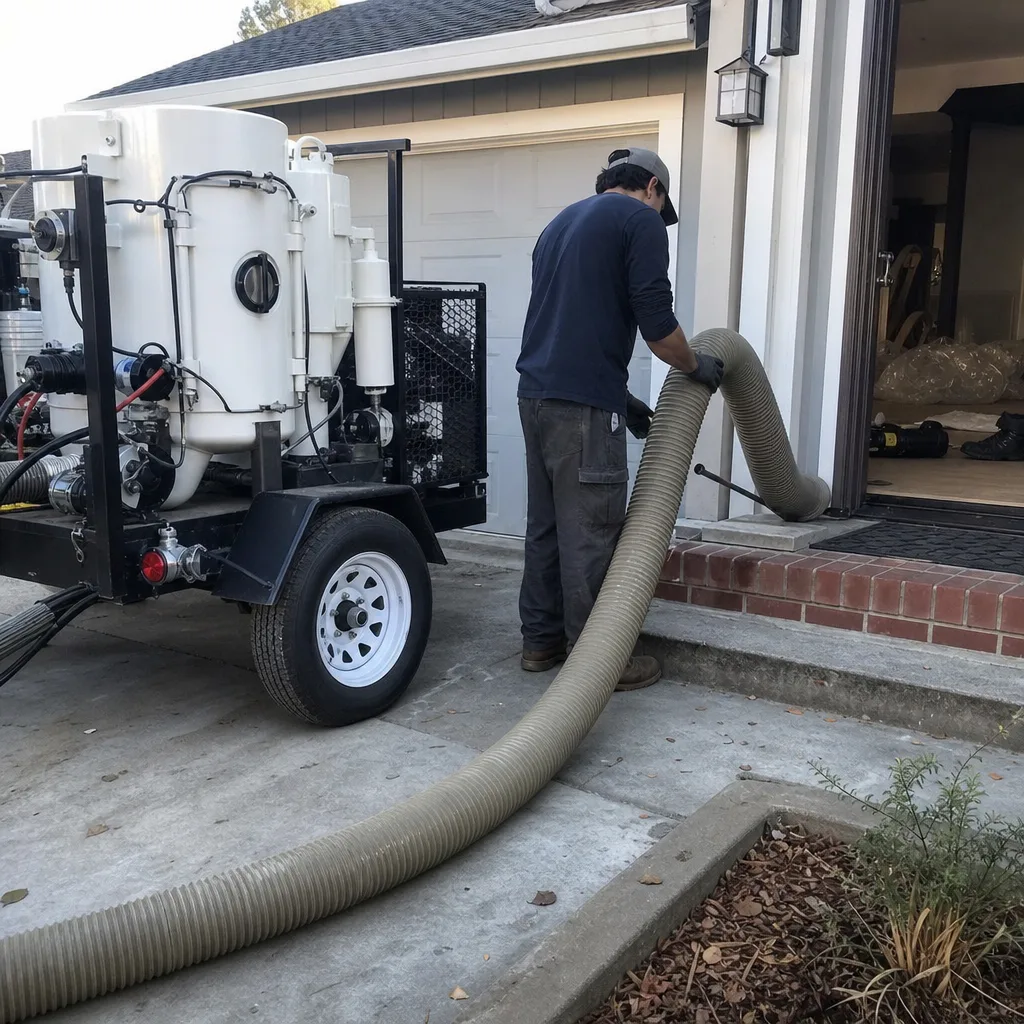
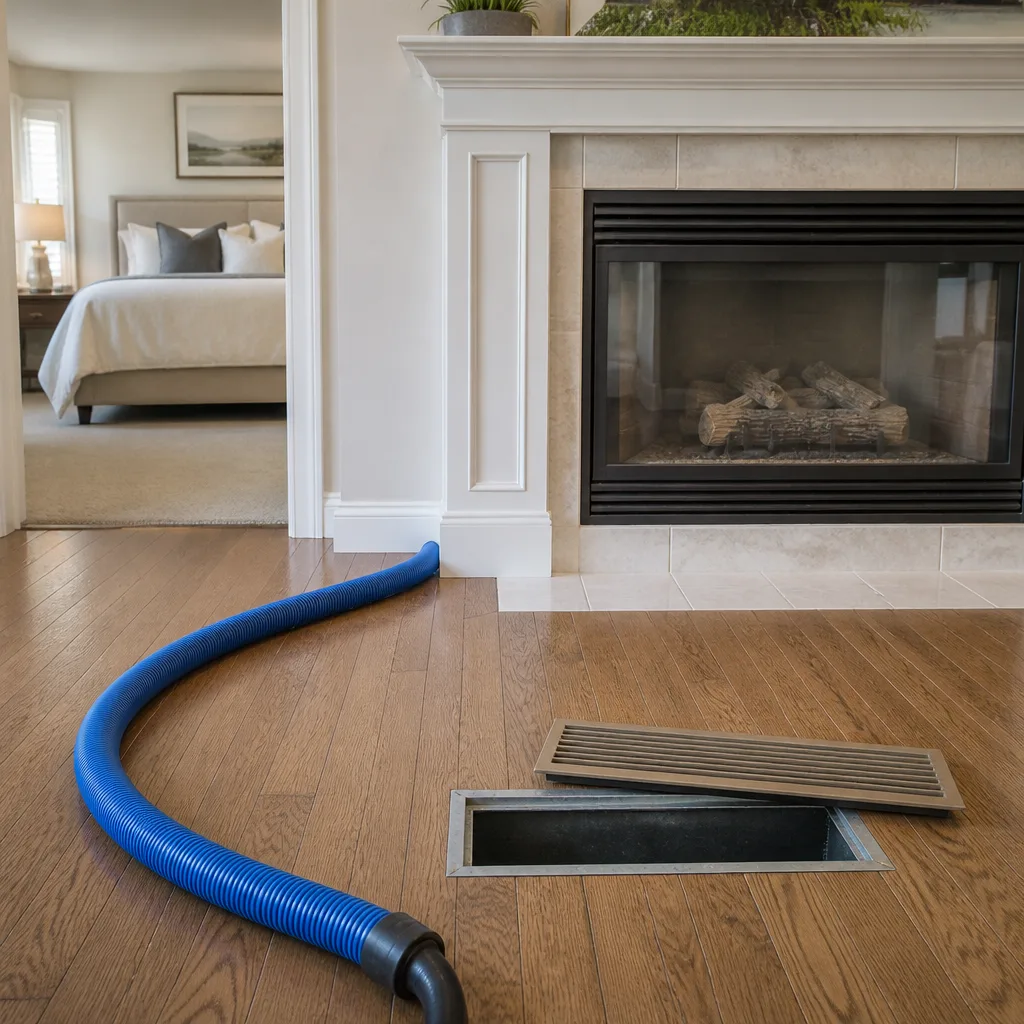 Whole-home duct cleaning
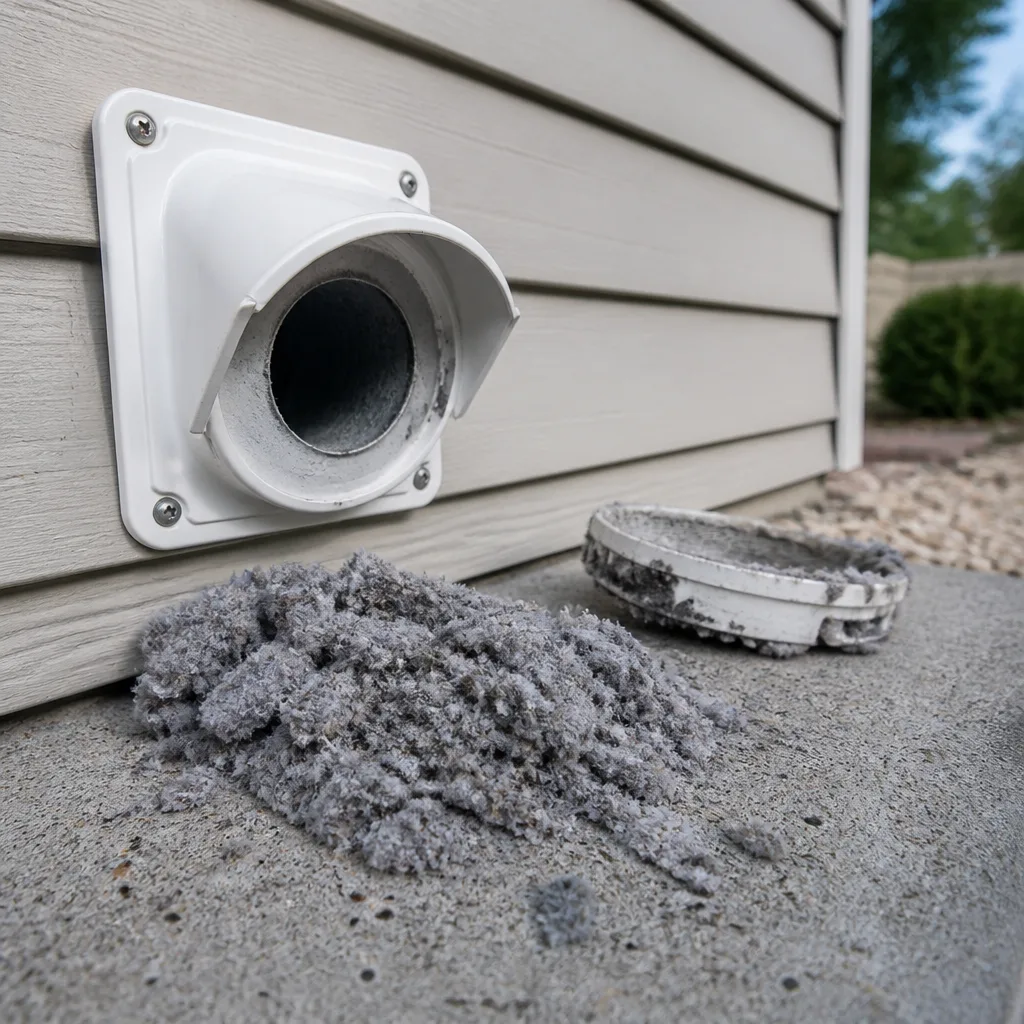 Dryer vent cleaning
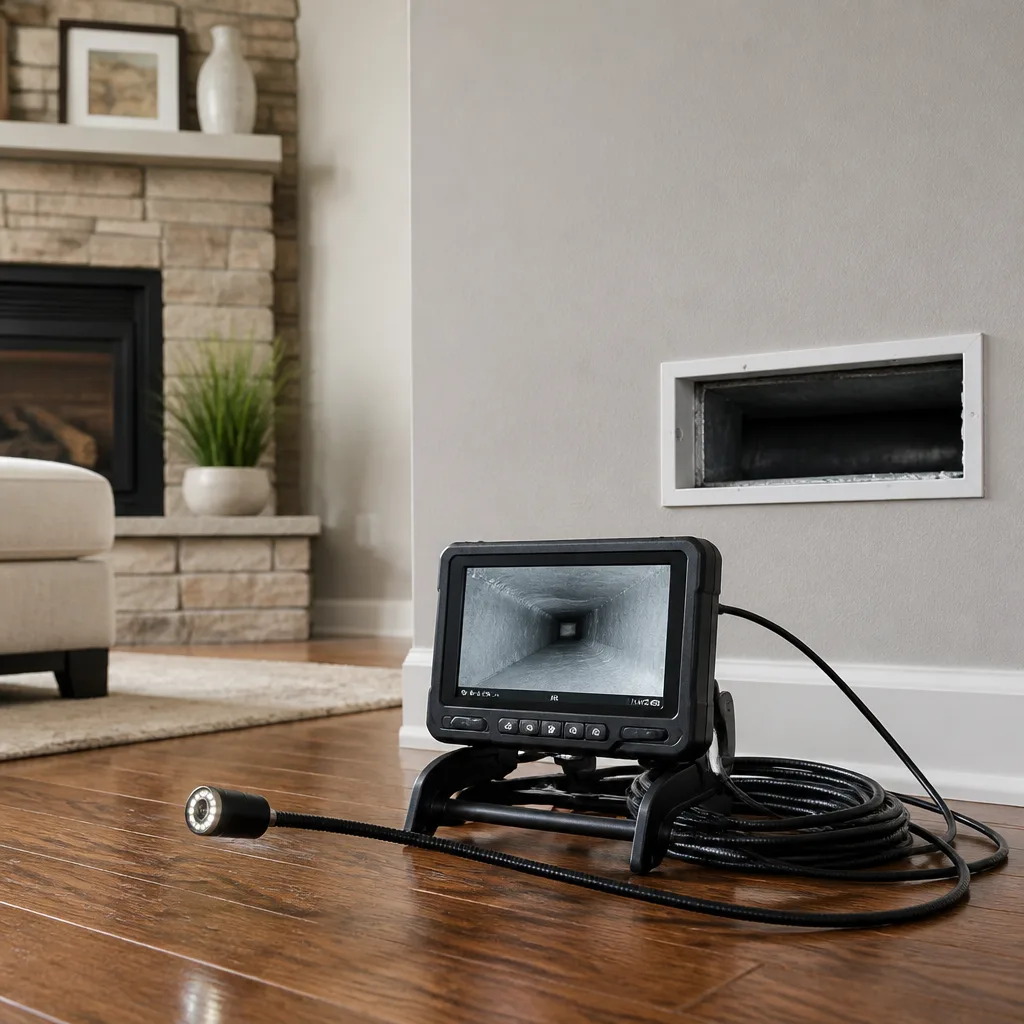 Camera inspection
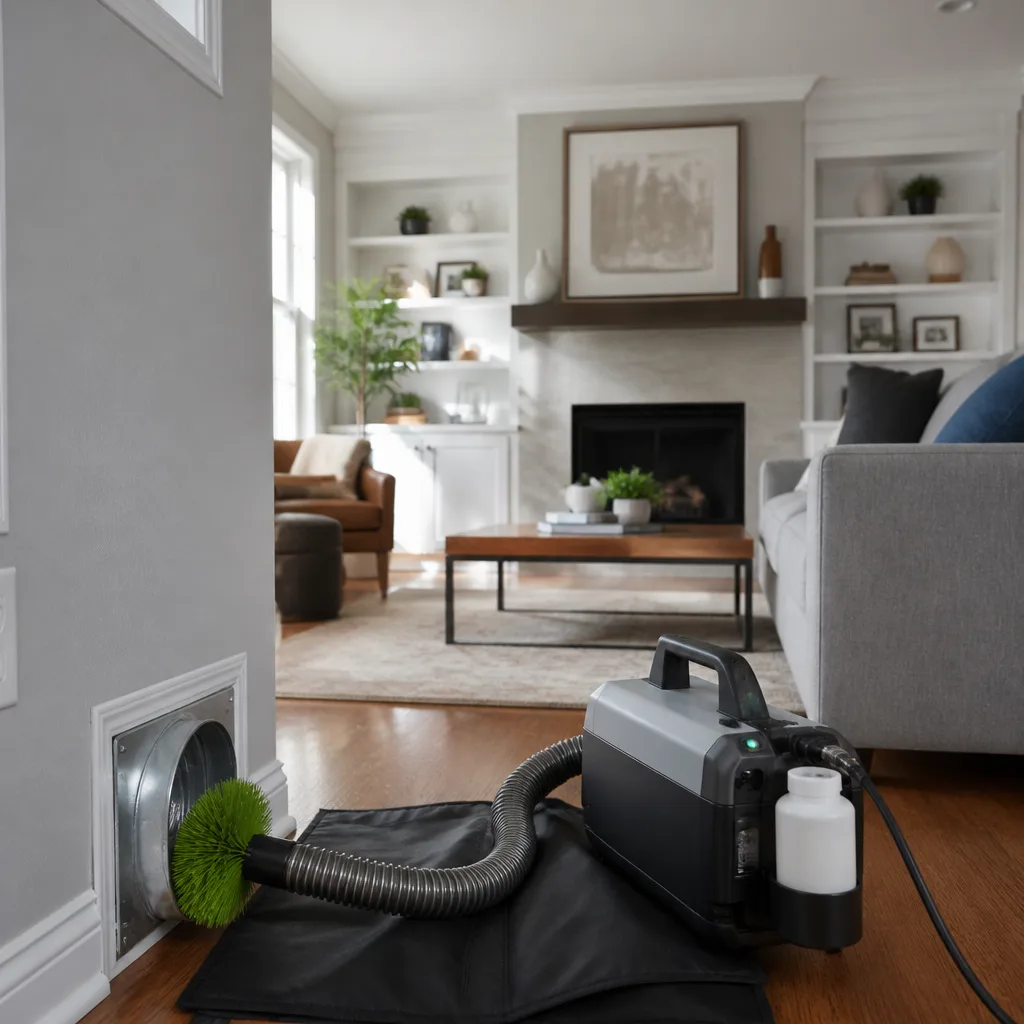 Sanitizing & deodorizing
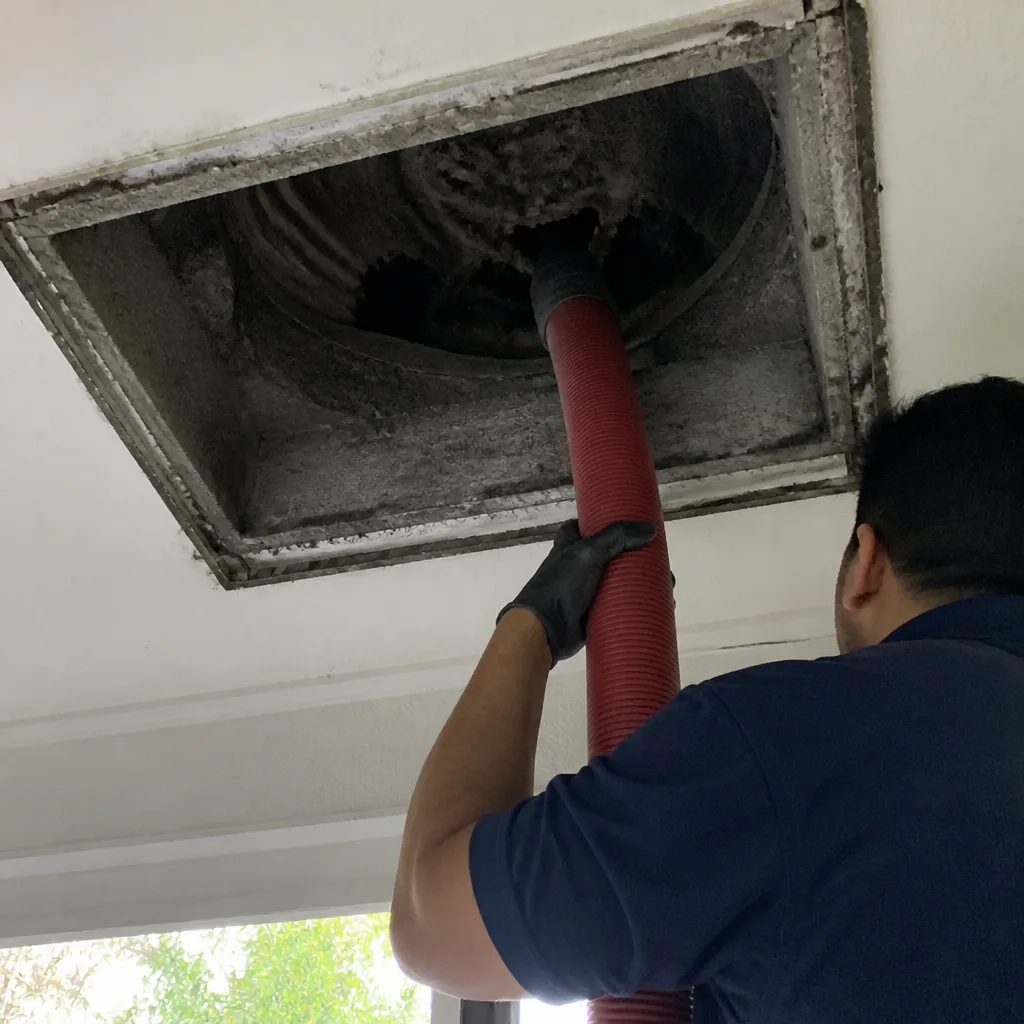
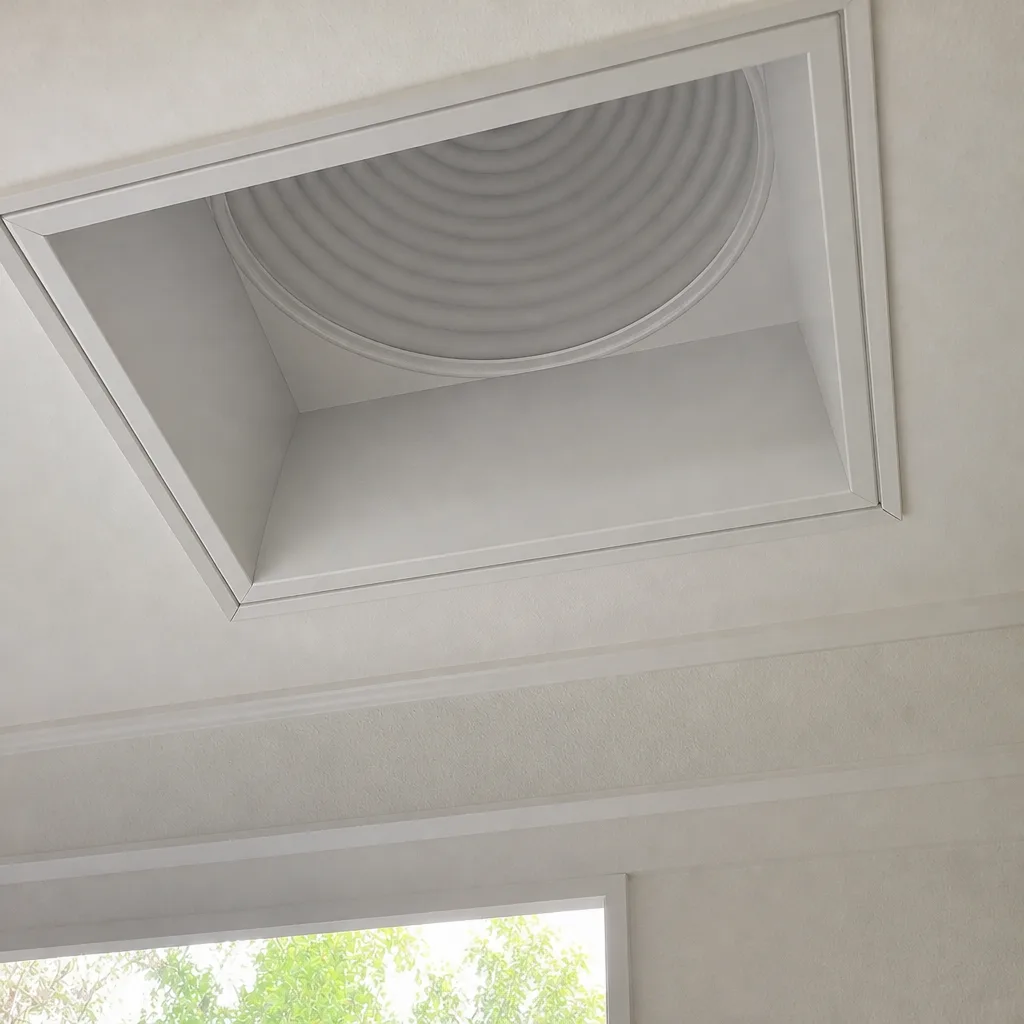
Whole-system duct and dryer vent check with before-and-after photos - you see exactly what came out of your vents
That "$99 whole-house special" is a bait ad - the real number appears once they are in your hallway, or the "clean" is a shop-vac at the register. We photograph the inside of your ducts before and after instead.
Choosing the Right Air Duct Cleaning Brand: A Buyer’s Guide for Richmond
When a duct cleaning company tells you they use “professional equipment,” that phrase covers everything from a shop vac to a truck-mounted negative pressure system with $40,000 in capital behind it. The brand name on the agitation and collection equipment tells you which category you’re actually hiring. Most homeowners never ask, which is exactly why the gap between real remediation-grade gear and a glorified vacuum persists in the market. This guide explains what Rotobrush, Nikro, and Abatement Technologies equipment actually does, how to verify a contractor really owns and runs it, and which specifications matter for the ducts in a Richmond home versus which are overkill. By the end you’ll be able to read a contractor’s equipment claims the way a technician does.
Quick Answer
The best air duct cleaning equipment in Richmond is a rotary brush agitation system paired with HEPA-rated vacuum collection, typically Rotobrush for agitation/extraction and Nikro for HEPA-rated pickup, with Abatement Technologies negative air machines for containment on contaminated jobs. But equipment alone doesn’t clean ducts. The same Rotobrush system produces dramatically different results depending on the operator’s training and process discipline. Verify that the contractor owns the gear (not just name-drops it), ask what HEPA filtration rating their vacuum carries, and confirm whether they can repair ductwork or only clean it. If a company can’t answer those questions clearly, the brand name on their website means nothing.
Styles & brands we work with
- Whole-home duct cleaning
- Dryer vent cleaning
- Camera inspection
- Sanitizing & deodorizing
Table of Contents
- Why Equipment Brands Matter More Than You Think
- What Rotobrush Systems Actually Do Mechanically
- What Nikro Equipment Is Designed For – and When It’s Overkill
- Abatement Technologies: Containment as a Standard
- How to Verify a Contractor Actually Uses the Equipment They Claim
- Equipment Capability vs. Technician Skill
- Matching Equipment to Richmond Home Conditions
- Whole-Home Air Quality Systems: Honeywell, Aprilaire, and What That Signals
Why Equipment Brands Matter More Than You Think
In most trades, brand names are marketing noise. In duct cleaning, they’re not. The reason is that the equipment determines the cleaning method itself. A shop vac and a Rotobrush are both vacuums, technically, but they operate on completely different physical principles. One pulls loose surface dust. The other agitates compacted debris with a rotating brush while simultaneously extracting it under controlled airflow. That’s not a difference of degree. It’s a difference of category.
Here’s the part most homeowners miss: the market for duct cleaning in Richmond is split between two kinds of operators. One kind invests in remediation-grade equipment and treats duct cleaning as a mechanical service with real capital behind it. The other kind owns a consumer vacuum, a brush on a flexible rod, and a marketing budget. Both call what they do “professional duct cleaning.” The brand name on the equipment is one of the few honest signals a homeowner can use to tell them apart.
This matters more in Richmond than in most cities because of the housing stock. Richmond has a wide mix of homes, from older properties with original rigid-metal ductwork to recent renovations with flexible duct runs and crawlspace HVAC systems. Each of those configurations demands different equipment approaches. A cleaning method that works fine on straight rigid-metal trunk lines can damage flex duct or leave compacted debris in the corrugations. A homeowner who understands what each piece of equipment does can ask better questions, spot a mismatch, and avoid paying for a cleaning that doesn’t touch the parts of the system that matter.
The good news: you don’t need to become an HVAC technician to evaluate this. You need to understand four pieces of equipment, one verification process, and one distinction between tool and operator. That’s what the rest of this guide covers. If you’re already comparing services and want to see how a full process looks end to end, our air duct cleaning service page walks through the actual steps a professional job involves in a local home.
What Rotobrush Systems Actually Do Mechanically
Rotobrush systems do two things at the same time: rotary brush agitation and simultaneous vacuum extraction. A flexible rotary brush travels through the duct run, physically scrubbing the interior walls and dislodging compacted debris. A connected vacuum pulls that debris into a collection system at the same moment. The brush and the airflow work together, which is why the method is called rotary brush extraction rather than “brushing” or “vacuuming.”
That simultaneity is the whole point. Consider what happens with a brush-only approach: the technician scrubs the duct walls, loosens years of accumulated dust, dander, and construction debris, and the debris becomes airborne. If the vacuum is disconnected or undersized, that debris doesn’t leave the duct system. It redistributes through the supply registers into the living space, or settles back onto the duct walls as soon as airflow stops. The homeowner paid for cleaning and got a dust plume.
Rotobrush solves this by design. The brush and the extraction are the same machine, so there’s no window during which loosened debris can escape. The brush heads are made in different stiffnesses and diameters for different duct materials, which matters because a stiff brush applied to thin flex duct can tear the liner just as easily as a shop vac can leave it dirty.
What this means for Richmond homeowners:
- Compacted debris gets dislodged, not just dusted. The rotary action applies mechanical force against the duct wall, which is what it takes to move debris that’s bonded after years of accumulation.
- Debris is captured during agitation. No sequencing gaps between scrub and extract.
- Different brush heads match different duct materials. A technician trained on the system selects heads based on what’s in the home, not one head for every job.
- Visible results are photographable before and after. Rotary extraction leaves a measurable change in the duct interior that a technician can document.
Ask any contractor you’re evaluating whether their agitation and extraction are integrated. If they brush first and vacuum later, you’re not getting rotary brush extraction. You’re getting two separate operations with a debris redistribution window in between.
What Nikro Equipment Is Designed For – and When It’s Overkill
Nikro builds HEPA-rated vacuum equipment for environments where contaminants must be captured, not just displaced. That specification matters when the duct system is carrying biological or fine-particulate contamination: mold spores, allergen loads, smoke residue after a fire, or fine construction dust after a renovation. A HEPA-rated vacuum captures particles at the filter, which means the exhaust airstream leaving the machine is cleaner than the airstream entering it. A non-HEPA vacuum pushes fine particles straight back into the room.
Whether that matters for your specific job depends on what’s in the ducts. Here’s the practical breakdown:
- Standard residential duct cleaning (dust, dander, general accumulation): HEPA-rated collection is a clear upgrade but not always a strict necessity. A high-quality vacuum with good filtration captures the bulk of the load. Nikro gets used here because it lets the technician work without worrying about redistribution.
- Post-renovation cleaning (drywall dust, sawdust, construction particulate): HEPA-rated collection is important. Fine construction dust is the hardest particulate to capture with a non-HEPA system, and it’s the kind most likely to lodge in respiratory tissue.
- Post-smoke or fire-adjacent cleaning: HEPA-rated collection is a genuine requirement. Smoke residue is a fine particulate with strong odor retention, and it re-contaminates easily if the vacuum can’t hold it.
- Households with documented mold or allergen issues: HEPA-rated collection plus containment equipment (see the next section) is the correct approach. Anything less risks spreading the very material the cleaning intends to remove.
The trap to watch for: a contractor claims to use “HEPA filtration” without naming the equipment. Consumer shop vacs sold with “HEPA filters” exist, but they’re not built for sustained duct cleaning volumes and they don’t hold up to the airflow demands. Ask what the vacuum is, and if the answer is a product name rather than a category, you’re talking to someone who doesn’t know their own equipment.
Our technicians have up to 15 years of experience working with this gear, and in our experience the owner who knows the difference between a HEPA filter in a shop vac and true HEPA-rated duct equipment is the owner who can spot a lowball bid for what it is.
Abatement Technologies: Containment as a Standard
Abatement Technologies equipment exists for one purpose: negative air pressure and contaminant containment. The machine pulls air out of a defined space and exhausts it through filtration, which means the space stays under negative pressure relative to the surrounding rooms. Air flows toward the machine, not away from it. If there’s mold, fine particulate, or smoke residue in a duct system, negative pressure ensures that when the technician breaks the seal to start work, contamination doesn’t migrate into the living space.
In remediation work, negative pressure is standard on every job. In residential duct cleaning, it’s not. Most residential cleaning companies don’t own the equipment, don’t use it, and don’t think in containment terms. That’s a real gap when the job involves contamination of any kind.
Two scenarios in Richmond homes where containment isn’t optional:
- Post-renovation cleaning in an occupied home. Drywall dust and construction particulate are fine enough to stay airborne for hours after work stops. Negative pressure keeps it moving toward the filter, not into the kitchen.
- Any duct system with confirmed or suspected biological contamination. Mold spores are small enough to pass through most residential HVAC filters. Negative pressure at the cleaning site ensures they move toward the collection equipment, not outward into the rooms being occupied.
For straightforward duct cleaning in a home with no contamination history, negative air pressure is a lower priority than good agitation and HEPA-rated extraction. But when a contractor reaches for Abatement Technologies gear on a job that warrants it, that’s a sign they understand the difference between cleaning and remediation, and they’ve equipped themselves for both.
How to Verify a Contractor Actually Uses the Equipment They Claim
Any contractor can put “Rotobrush” and “HEPA” on their website. Reducing the number of companies that can honestly claim those words starts with asking for evidence. The verification process isn’t complicated. It’s just specific.
- Ask for the equipment name and model. “Rotobrush” is a brand, and the brand makes several systems. “HEPA vacuum” is a category. A contractor who knows their gear can name what they use and what it’s for. A contractor who can’t probably doesn’t own it.
- Ask for recent job photos showing the equipment on site. Before-and-after photos of the duct interior are the standard documentation most professional operations produce. Photos that show the machine in the home, in the room where the work happened, are the proof that the equipment is actually deployed.
- Ask which brush heads or tooling they’ll use for your duct material. A technician running rotary brush extraction on flex duct should talk about flex-compatible brush heads and lower-pressure settings. On rigid-metal trunk lines they should talk about agitation depth and coverage. If they answer the same way for every home, they don’t have the tooling or they don’t know it.
- Ask who performs the work. This one matters more than homeowners realize. A company that performs the work themselves with their own technicians can talk specifics about the equipment. A company that subcontracts or resells can’t answer any of the questions above, because they don’t know what shows up on site.
- Ask for a written scope and estimate before any work starts. The estimate should describe what equipment is used, what gets cleaned, and what the price covers. A one-line quote with a coupon price and a “starting at” number is a flag. Our work is priced on one flat price per system agreed before work starts, and we’ll always put that in writing before a technician picks up a tool.
None of this is unreasonable to ask. Any professional operation will answer these questions without hesitation, and a good operation will answer them with enough specificity that you learn something about your own ducts in the process.
Equipment Capability vs. Technician Skill
Here’s where the equipment-brand conversation gets complicated, and where a homeowner needs to be careful: the same Rotobrush system produces very different results depending on the operator. The tool sets the ceiling on what’s possible. The technician determines how close to that ceiling the work actually gets.
The variables that separate a capable operator from an average one:
- Speed control. Too fast and the brush skips over the duct surface. Too slow and the technician can’t complete the run in a reasonable time. The correct feed rate depends on the duct material and the debris load, and it’s a judgment call.
- Brush selection. The right brush head for the duct material is the difference between a clean duct and a torn liner. That’s a trained decision, not a default.
- Coverage discipline. Every branch line, every run, every supply and return needs its own pass. A technician who works quickly and doesn’t run every branch leaves debris in the ducts no matter what equipment they’re carrying.
- Sealing and access discipline. Cutting into ducts to reach the interior of a run and resealing it properly after cleaning is a skill. A job that leaves an improperly sealed access hole is a job that leaks air and eventually reintroduces dust.
This is why “we use Rotobrush” on its own isn’t enough. Ask the follow-up question: who runs it, what’s their training, and how does the company check the work before they leave? A company that trains its own technicians and has a process for verifying coverage is a different hire than a company that bought the machine and let the crew figure it out. Our technicians have up to 15 years of experience with this equipment, which is why they read each duct run before they start, rather than running a fixed procedure on every home.
Matching Equipment to Richmond Home Conditions
Richmond’s housing stock spans more than a century of construction, and the duct system in your home probably reflects the era it was built or renovated. The equipment and approach that suits a rigid-metal system from an older property is different from what suits a newer build with flexible runs. Here’s how to prioritize based on what you have.
Older homes with original rigid-metal ductwork
Rigid-metal ducts can accumulate decades of debris and still be structurally sound, which is generally good news. The priority here is deep agitation. Rotary brush extraction with appropriate brush stiffness is the right tool, because the debris can be well compacted against the metal walls. HEPA-rated collection is a strong upgrade on older systems where the debris load is unknown, and negative pressure is worth asking about any time the home has a renovation or water history.
Homes with crawlspace HVAC systems
Crawlspace duct runs see more environmental exposure than ducts in a conditioned space, which means accumulated moisture-related debris and, in some cases, biological growth. For these systems, HEPA-rated extraction isn’t optional. You want Nikro-type collection, and you want to know whether the company also uses Abatement Technologies negative pressure equipment. A cleaning-only approach on a crawlspace duct without containment has a real chance of redistributing contamination. And if the ducts themselves are damaged or disconnected, cleaning alone isn’t the fix, which is why a repair-capable contractor matters on these systems.
Homes with older flex duct
Flex duct has a liner and corrugations that trap debris more aggressively than rigid metal, and the liner is easy to damage. The priority is brush selection and operator care. Ask the technician specifically how they handle flex duct brush heads and what airflow they’ll use. A company that runs a standard rigid-metal brush through flex duct is a company that may leave you with a torn liner.
Post-smoke or post-renovation cleaning
For both of these scenarios, the priority is HEPA-rated collection plus containment. Smoke residue and fine construction debris are exactly the particles that a non-HEPA system fails to capture. Abatement Technologies negative air equipment is worth asking about on either job type, and this is also a case where whole-home air quality systems like Honeywell or Aprilaire matter, because if the home has an air cleaner, its filter needs to align with the cleaning approach.
Standard rigid-metal systems in reasonably good condition
If your ducts are rigid, dry, and undamaged, rotary brush extraction with good collection is the appropriate scope. HEPA-rated collection is still the right choice, but the containment conversation is a lower priority than it is for a crawlspace system. What’s more important here is thoroughness: every branch, every run, all supply and return registers.
Whole-Home Air Quality Systems: Honeywell, Aprilaire, and What That Signals
Duct cleaning doesn’t happen in isolation. If your home has a whole-home air cleaner, humidifier, or UV purification system, the ducts are part of a larger indoor air quality setup. A company that services and installs Honeywell and Aprilaire systems understands how the whole configuration works, which matters when a duct cleaning is only part of what your home needs.
Here’s what to look for: a contractor who can explain how the duct cleaning interacts with your air cleaner’s filter and airflow, and who can flag when a filter is the wrong specification for the system. That’s not a sales pitch. It’s basic fluency in whole-home air quality, and it’s separate from the ability to run a rotary brush.
The three services that matter for a complete approach are air duct cleaning, dryer vent cleaning, and air duct repair. Having one company that handles all three means fewer callbacks and a consistent understanding of the home. Dryer vent cleaning, in particular, is a safety service rather than a comfort upgrade. Lint accumulation in a dryer vent is a fire hazard, and it’s worth prioritizing on any home where the vent run has never been inspected. Air duct repair is the piece most cleaning-only companies can’t provide, and it’s the piece that matters when a technician opens up a duct system and finds it was never fully connected or has damaged sections. We clean it. If it’s broken, we fix it.
If you’re working through the full picture for a Richmond property, the Richmond overview page has the local service coverage, and our Meadow Air Duct Cleaning home page has the complete service list.
Common Mistakes to Avoid
- Assuming “professional equipment” means remediation-grade tools. That phrase appears on nearly every duct cleaning website in Richmond. It doesn’t distinguish a shop vac from a Rotobrush system. Ask for equipment names and models, and if the answer is vague, the equipment is probably a shop vac.
- Hiring based on the lowest bid. A bid that’s significantly below the rest of the market is a bid built around minimal equipment and minimal scope. The work might look complete from the register, but if the agitation wasn’t real and the collection wasn’t HEPA-rated, you’ve paid for a dust redistribution, not a cleaning.
- Not asking about duct material compatibility. Standard rigid-metal brush heads applied to older flex duct can cause damage. Ask how the contractor handles your specific duct type, and if they can’t answer the question, they don’t have the tooling.
- Skipping the repair question. A cleaning-only contractor who finds disconnected, crushed, or leaky duct sections can’t fix them. You’ll end up hiring a second company for the repair. Ask upfront whether the contractor can handle both, and get it in the scope.
- Accepting “before/after” photos without a timestamp or address. Some contractors use stock photos of a cleaned duct system in their marketing. Ask to see photos from a recent Richmond job, on site, with the equipment visible.
- Overlooking the dryer vent. A duct cleaning company that doesn’t offer dryer vent cleaning leaves a real fire risk unaddressed. The dryer vent is separate from the HVAC ducts, and lint accumulation in the vent run is a leading cause of residential fire. If the vent hasn’t been inspected, prioritize it.
- Ignoring crawlspace or post-renovation conditions in the scope. A cleaning that treats a contaminated crawlspace duct system the same as a standard rigid-metal system skips containment that the situation demands. Tell the contractor what your home has, and confirm the scope matches.
See the difference
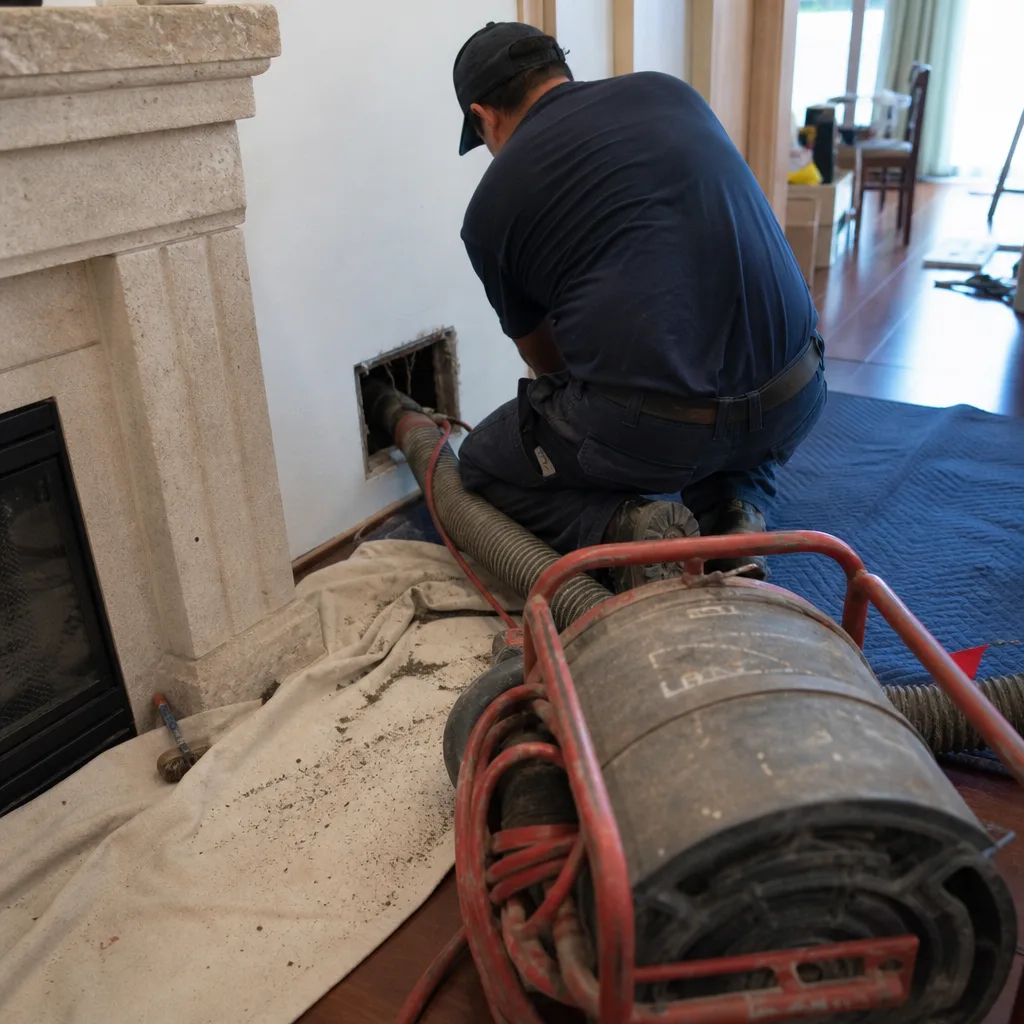 Before
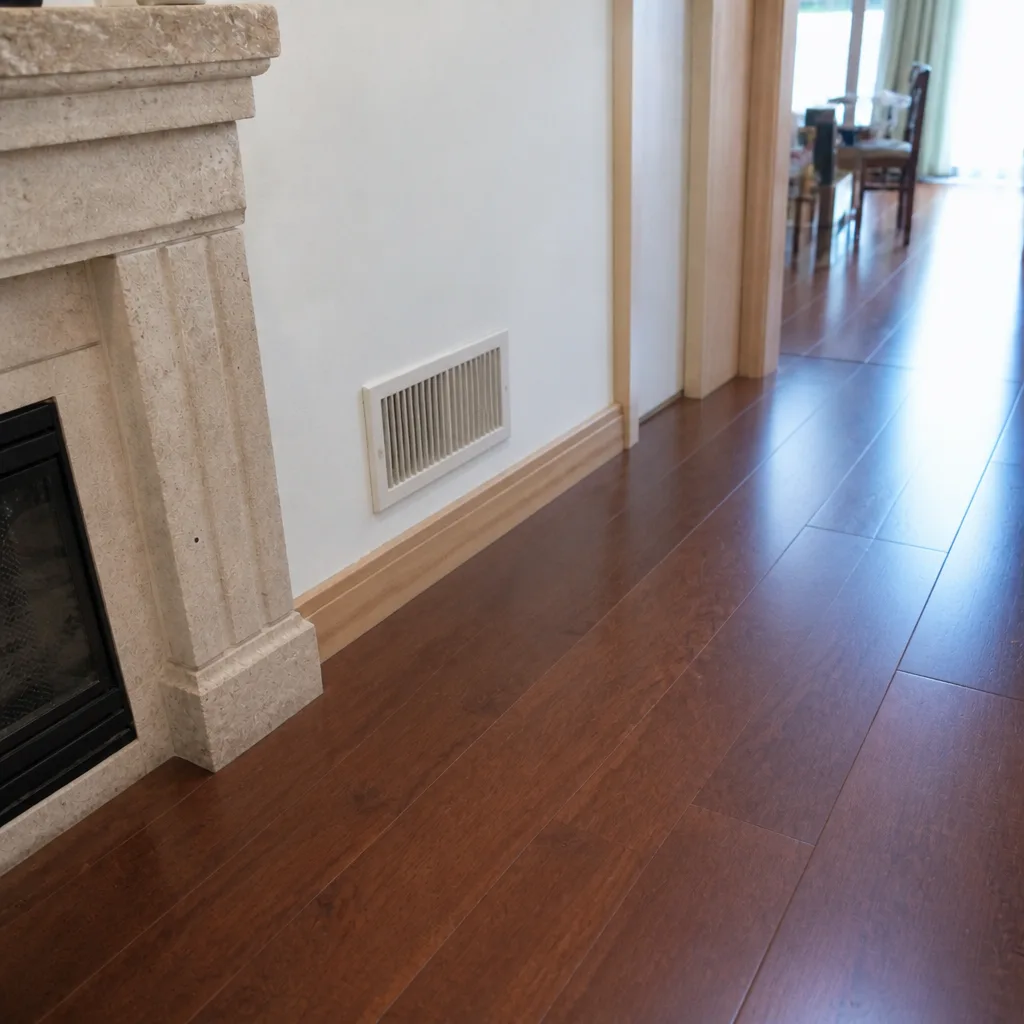 After
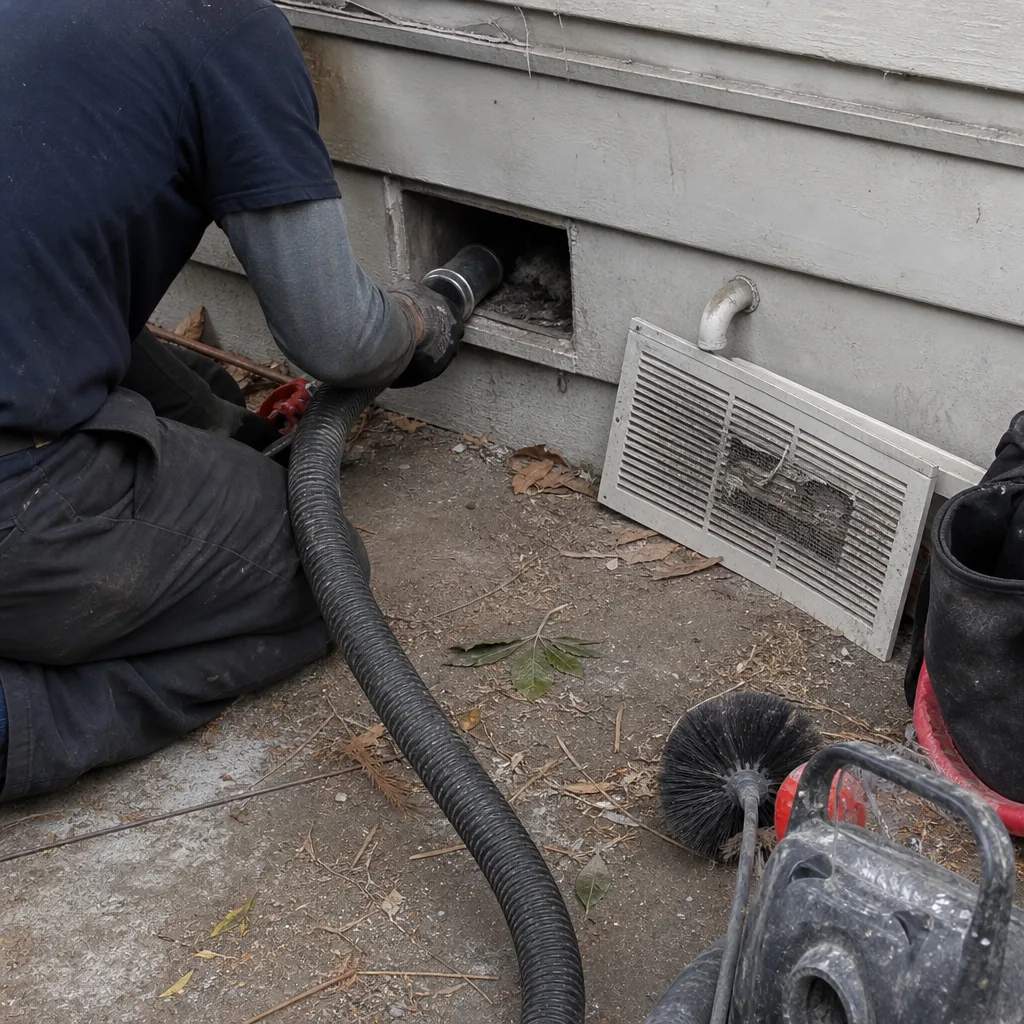 Before
 After
 Before
 After
When to Call a Professional
Most homes in Richmond benefit from a professional duct cleaning at some interval, but there are specific scenarios where calling is more urgent than a routine scheduling. Call a professional if any of the following describes your home: you’ve just completed a renovation and there’s visible construction dust around the registers; you’ve noticed a persistent musty smell coming from the HVAC system; someone in the home has worsening allergy or asthma symptoms that don’t improve with standard filtration; you’ve recently moved into an older Richmond home and the duct history is unknown; the HVAC system isn’t performing at the level you’d expect for its age; or the dryer is taking noticeably longer to dry clothes, which is a signal that the vent run needs attention. Each of these scenarios points to a scope that a thorough cleaning-and-inspection can address, and none of them are solved by a quick pass with a consumer vacuum. Meadow Air Duct Cleaning offers free estimates in Richmond. Call (844) 459-0252. We answer 24/7. Fast dispatch from 7am to 7pm, Sunday through Friday.
Frequently Asked Questions
Rotobrush is the industry benchmark for rotary brush extraction, and Nikro is the standard for HEPA-rated vacuum collection. Both are used by remediation professionals, and together they represent the equipment baseline for a genuine professional cleaning. Abatement Technologies negative air machines complete the containment side for jobs with contamination. A contractor who can name and explain all three has real equipment. A contractor who only says “professional grade” on their site may not. Call (844) 459-0252 for a free estimate and we’ll walk through what our equipment does on a job like yours.
Ask for the equipment name and model, ask for recent job photos showing the machine on site, and ask which brush heads they’ll use for your specific duct material. A technician who knows the gear can answer all three. A technician who can’t probably doesn’t own the equipment. Asking about scope and getting a written estimate before work starts is the final check. Call (844) 459-0252 and we’ll answer the equipment questions directly, no pressure.
For standard residential duct cleaning, HEPA-rated collection is a strong upgrade that protects against fine particulate redistribution. For post-renovation, post-smoke, or crawlspace duct systems, it’s a genuine requirement. A non-HEPA vacuum pushes fine particles back into the room, and the particles most likely to stay airborne are also the ones most likely to lodge in respiratory tissue. If your home has a contamination history, insist on HEPA-rated equipment. Call (844) 459-0252 and we’ll recommend the right scope.
Because the operator determines how close the work gets to what the equipment can actually achieve. Brush selection, feed rate, coverage discipline, and access sealing are all trained decisions. A technician who works methodically with a moderately-specified tool out-performs one who rushes through every branch with the best gear available. Our technicians have up to 15 years of experience with this equipment, so ask any contractor you’re considering what their training and verification process looks like. Call (844) 459-0252 for a free estimate.
HEPA-rated collection (Nikro-type) is a genuine requirement for crawlspace systems, and Abatement Technologies negative air equipment is worth verifying because crawlspace ducts see more environmental exposure. Cleaning-only approaches without containment on a crawlspace system carry real risk of redistributing contamination. If the ducts are also damaged, a repair-capable contractor is the right hire, because cleaning alone won’t fix a disconnected run. Call (844) 459-0252 and we’ll talk through what your crawlspace system needs.
Most duct cleaning companies clean only and refer repairs out. A company that offers Air Duct Repair as a standalone service can diagnose and fix structural problems in the duct system, not just surface-level cleaning. Having one contractor for both means you don’t discover damage in the middle of a cleaning and then have to schedule a second visit. Ask upfront. We clean it. If it’s broken, we fix it. Call (844) 459-0252 for a free estimate.
The Bottom Line
Equipment brand names are a real signal in duct cleaning because they describe the method itself. Rotobrush means real agitation with integrated extraction. Nikro means HEPA-rated collection, which matters when contamination is present. Abatement Technologies means containment-grade standards, which matter on crawlspace, post-renovation, or post-smoke jobs. But equipment alone doesn’t clean ducts; the technician running it does. So the complete check for a Richmond homeowner is: what’s the equipment, who runs it, and can they also repair what they find? A contractor who can answer all three clearly, in writing, before any work starts, is a contractor worth hiring. A contractor who can’t, isn’t, regardless of what their website says.
If you’re ready to have your ducts evaluated by a team that can clean, repair, and address your whole-home air quality setup in one service, call Meadow Air Duct Cleaning at (844) 459-0252 for a free estimate. We answer 24/7. Fast dispatch from 7am to 7pm, Sunday through Friday. Our equipment is professional-grade, our price is set per system by written estimate before work starts, and we’ll hand you before-and-after photos of your own ducts when the job is done. If you’re looking for a starting point on the services, the Meadow Air Duct Cleaning home page and the Richmond coverage page have the details, and our dryer vent cleaning service is worth scheduling alongside the ducts.
Written by the team at Meadow Air Duct Cleaning.