
Last updated November 15, 2026
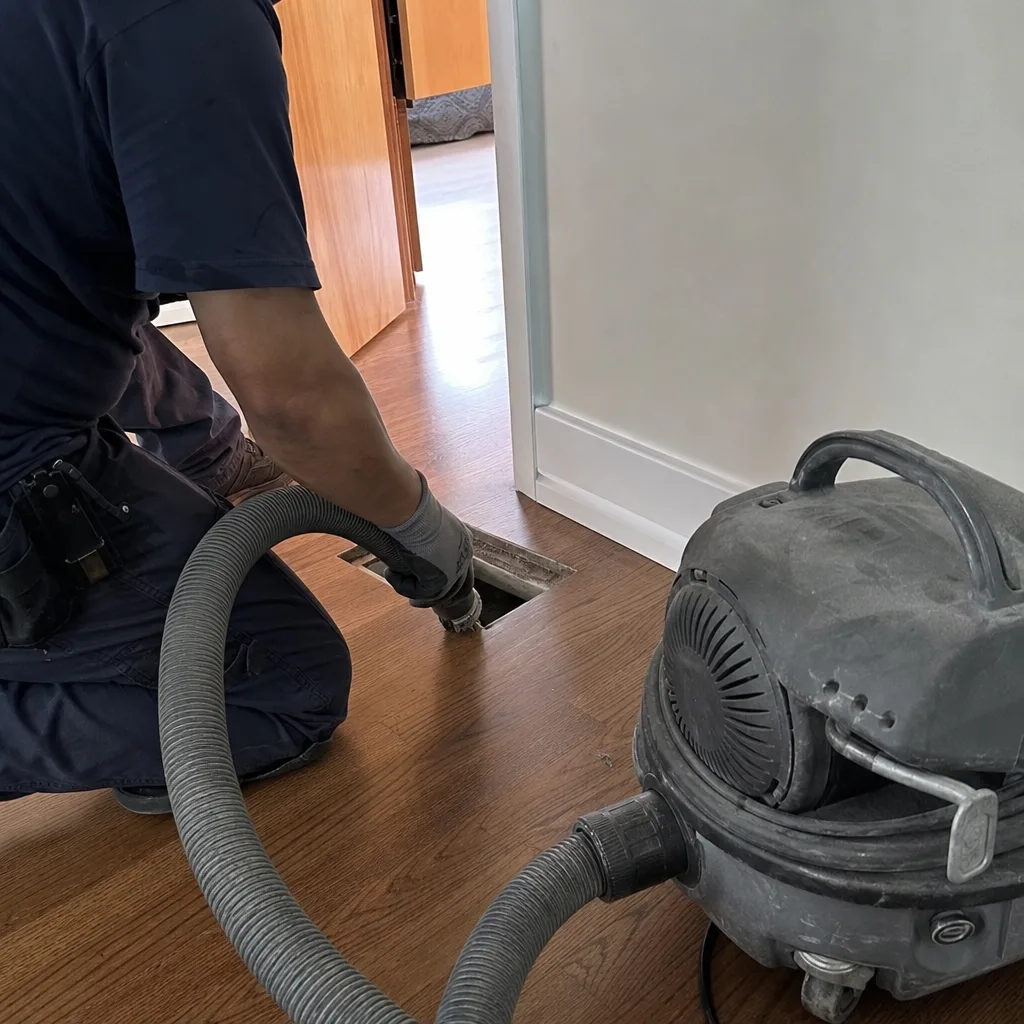
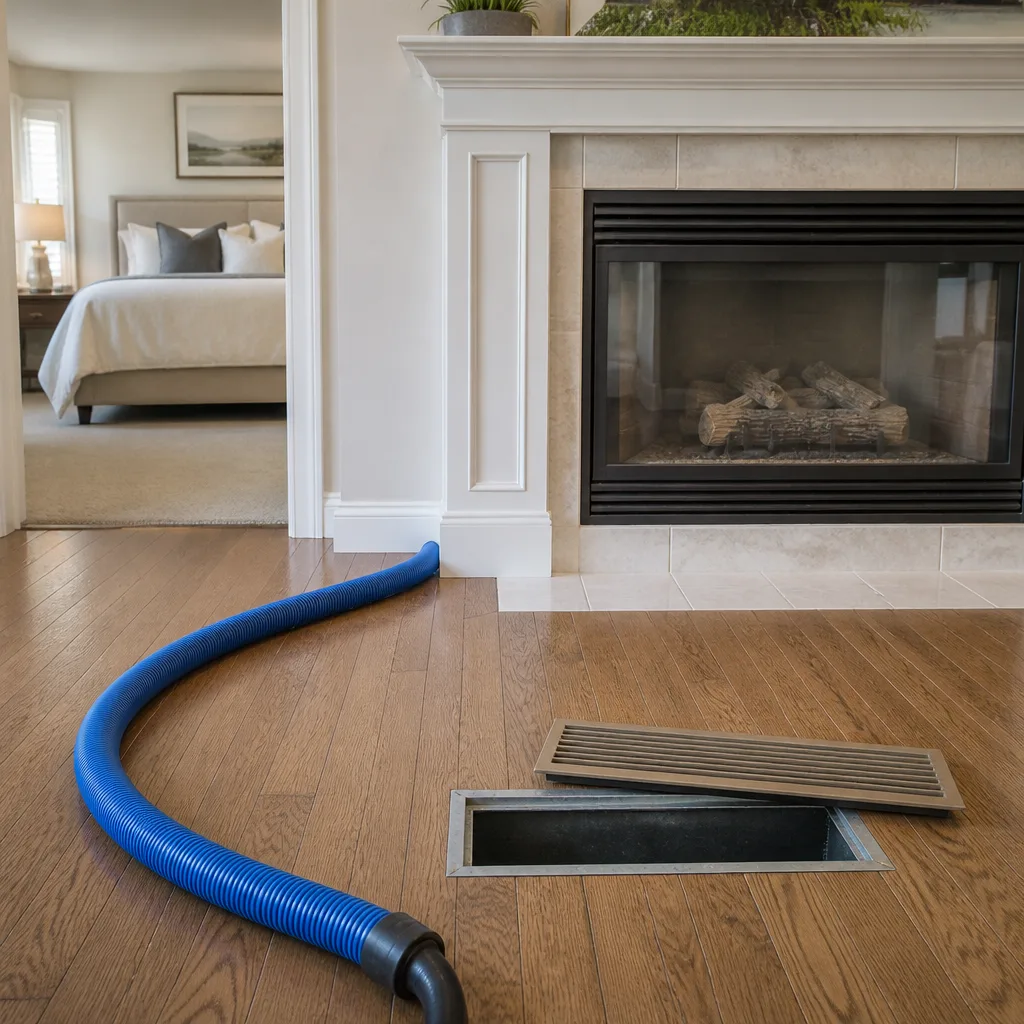 Whole-home duct cleaning
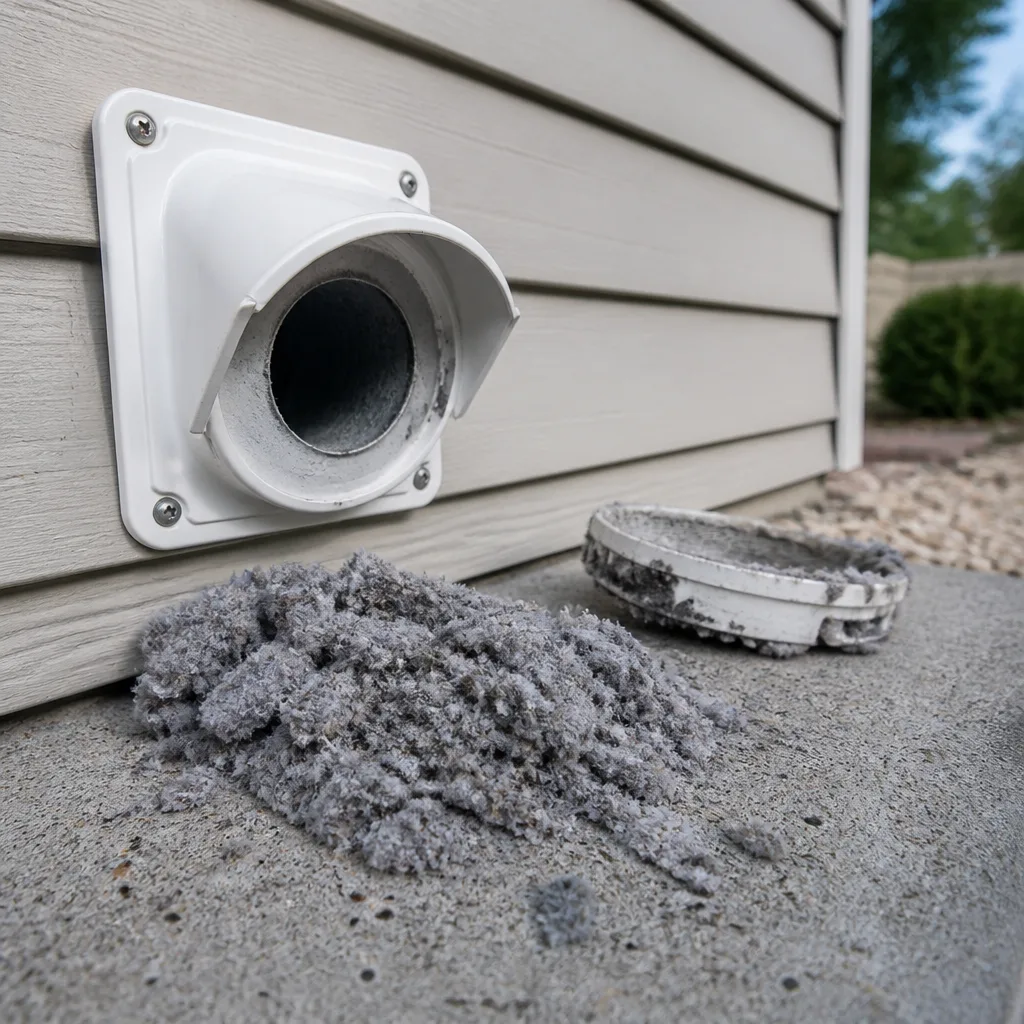 Dryer vent cleaning
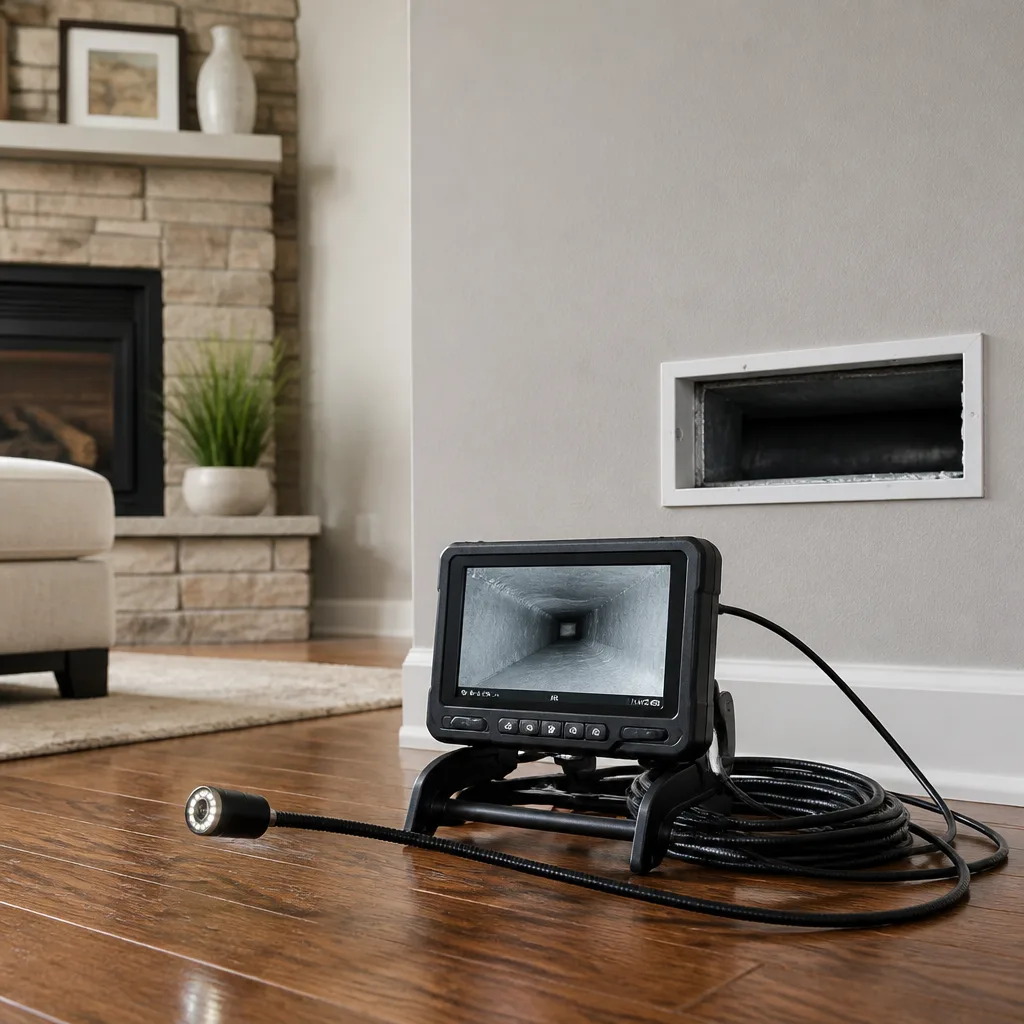 Camera inspection
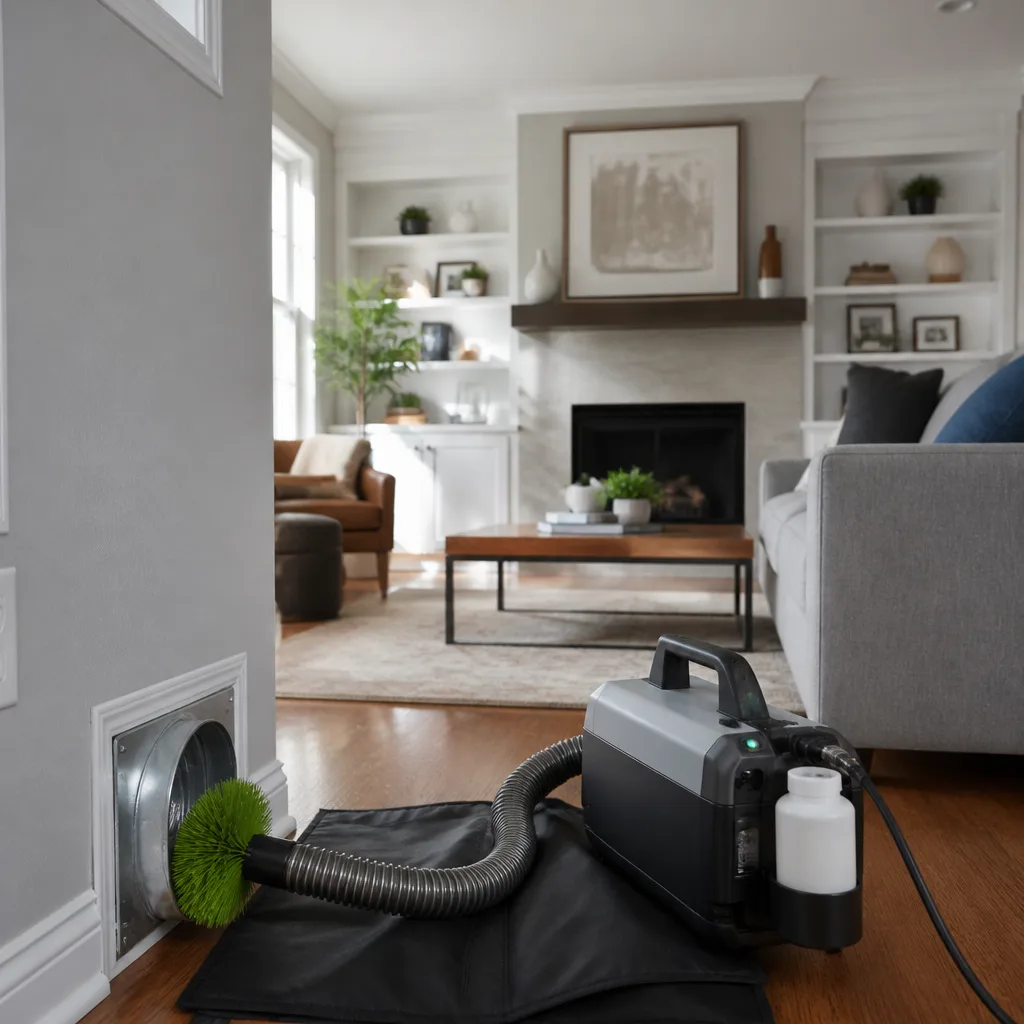 Sanitizing & deodorizing
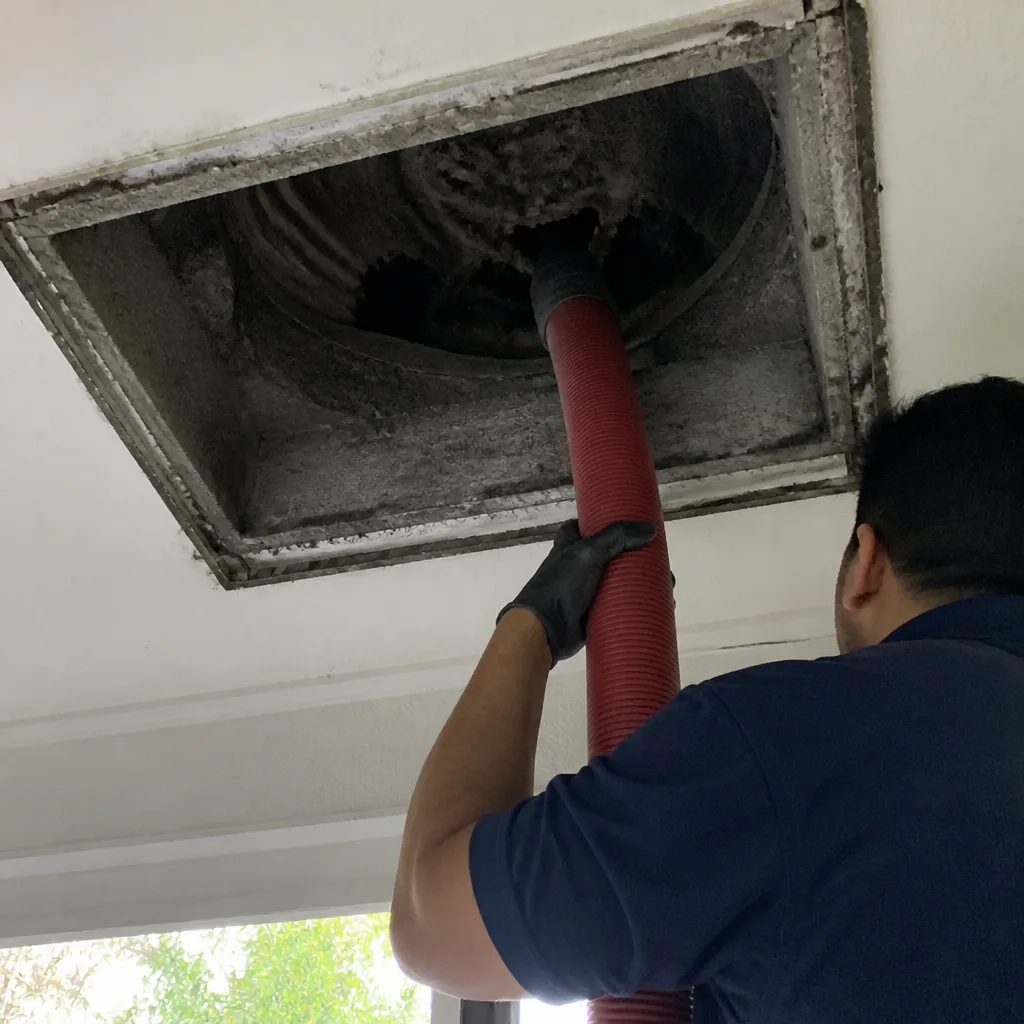
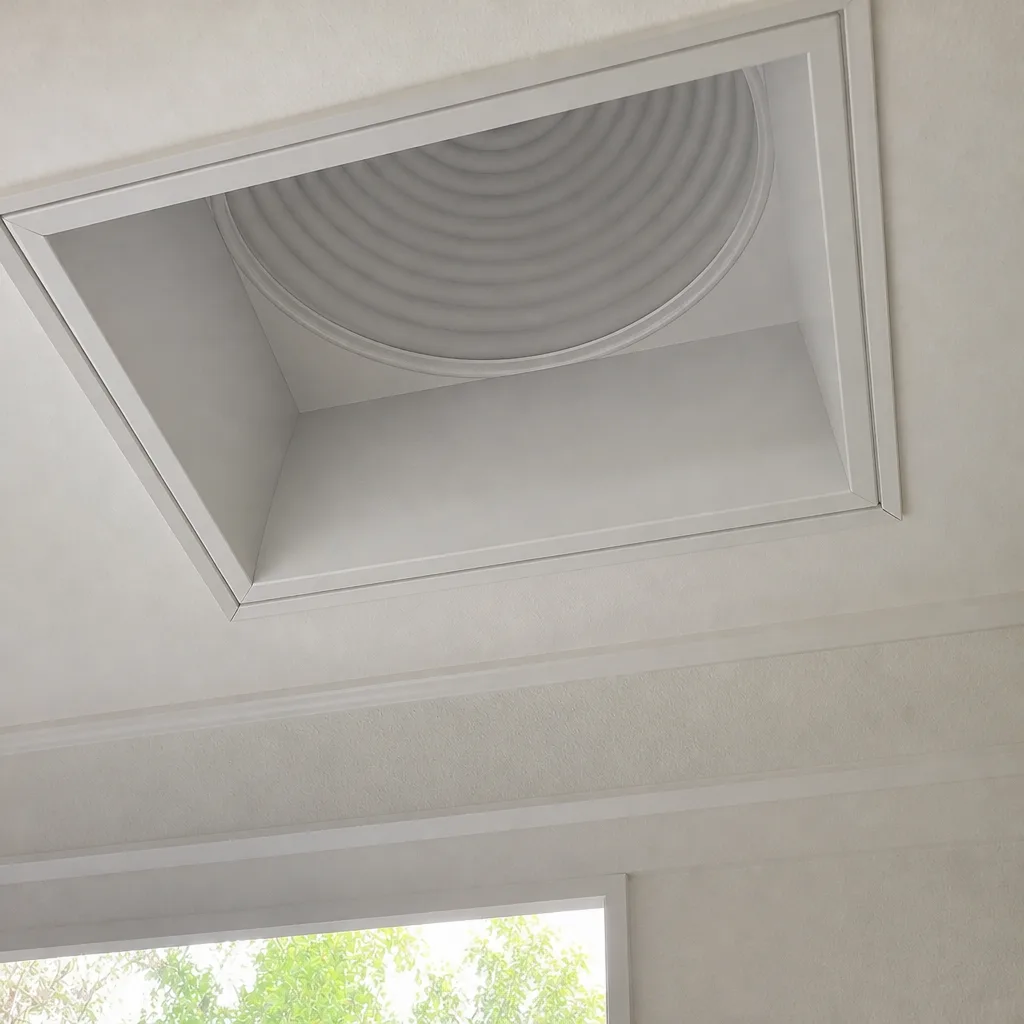
Whole-system duct and dryer vent check with before-and-after photos - you see exactly what came out of your vents
That "$99 whole-house special" is a bait ad - the real number appears once they are in your hallway, or the "clean" is a shop-vac at the register. We photograph the inside of your ducts before and after instead.
Air Duct Cleaning Maintenance Checklist for Richmond Homeowners
The standard “change your filter every 90 days” advice was not written for a home in Richmond. It was written for a house with predictable weather, steady indoor humidity and an HVAC system that runs an even number of hours every month. Richmond doesn’t work that way. Summer mornings arrive under a low gray ceiling of fog, afternoons dry out with a stiff west wind, and for a few weeks each fall the whole bay sits under wildfire smoke that finds its way into every return grille in the neighborhood. Your ductwork is breathing all of it. This guide gives you a real maintenance calendar for a Richmond home, the inspection points you can check yourself without opening a single duct, filter thresholds that make sense for local air quality, and the verification steps that tell you whether a cleaning actually happened. It’s the checklist we’d hand a friend who just bought a 1950s bungalow near Barrett Avenue and wanted to know where to start.
Quick Answer
A Richmond air duct maintenance checklist has three parts: a filter schedule that tightens during the fall wildfire-smoke window, a monthly five-minute visual check of your registers and airflow, and a full professional cleaning and inspection every three to five years depending on the home. Homes with pets, recent renovations, or a prior budget cleaning that may have missed the trunk lines should be on the shorter end. Document what you see with photos and notes so you have a baseline before any contractor touches the system.
Styles & brands we work with
- Whole-home duct cleaning
- Dryer vent cleaning
- Camera inspection
- Sanitizing & deodorizing
Table of Contents
- Why Richmond Ducts Age Differently
- The Richmond Month-by-Month Duct Maintenance Calendar
- Five Inspection Points You Can Check Yourself
- Filter Upgrade Thresholds: When MERV-8 Is Enough and When It Isn’t
- How to Document Your Duct Condition Over Time
- Post-Cleaning Verification: Did They Actually Clean the System?
- Cleaning vs. Repair: Knowing Which Problem You Have
- When to Call a Professional
- Frequently Asked Questions
Why Richmond Ducts Age Differently
Richmond sits in a band of the East Bay where the weather is mild enough that most people leave the heat off for months and then run the system hard in short bursts. That pattern matters more than people realize. A furnace that cycles on and off in short runs pulls a small puff of air through the returns each time, and any dust sitting in the ductwork gets lifted and pushed back into the living space instead of being carried to the filter in one continuous flow. Long, steady run cycles give a system time to filter properly. Short cycles do not.
The damp side of the local climate adds the second variable. Fog that lingers into the morning pushes indoor relative humidity up, and higher humidity makes dust particles heavier and stickier. Instead of staying airborne where the filter can catch them, those particles settle on the inside walls of the duct runs and start to build a light film. That film is what a proper rotary brush cleaning removes. A shop vac dragged up to a register will not touch it, because the film isn’t at the register, it’s six or ten feet back in the branch line.
Then there’s smoke season. When wildfire smoke settles over the bay, particulate in the outdoor air spikes, and anything that enters your return is either caught by the filter or deposited in the ducts. Homes near the Chevron refinery corridor and along the lower flats do not have a different climate than homes up in the hills, but they do sit in the same smoke plume, and the same fine particulate finds the same return grilles. The practical takeaway: Richmond duct maintenance has to account for both a mild-but-damp baseline and a handful of high-particulate weeks each year. A generic 90-day filter rule misses both.
The Richmond Month-by-Month Duct Maintenance Calendar
Here’s the checklist we actually recommend for a Richmond home. It’s organized by the seasons as they show up here, not as they appear on a national calendar. Treat it as a starting frame and adjust for your house, your pets and your HVAC run time.
Late Fall through Winter (November through February)
- Check and replace the filter at the start of heating season, then again six to eight weeks in. Heating run time is heavier and the filter loads faster than people expect.
- Walk every room and feel the supply registers. Note any room that feels noticeably weaker than the others. Uneven airflow in winter is often a sign of a crushed or disconnected branch line.
- Vacuum the return grilles at the face, using a brush attachment. Do not remove the grille unless you know how to reseat it.
- Log the thermostat runtime if your unit tracks hours. A system running far longer than usual for mild weather is a signal worth investigating.
Spring (March through May)
- Do the five-point visual inspection (see the next section). Spring is the best time because you’re not in the middle of heating or cooling demand.
- Photograph every register and the inside of the air handler cabinet where accessible. These photos become your baseline for the next contractor visit.
- Schedule any professional cleaning for the months before smoke season, so your system starts the fall with clean runs and a fresh filter.
- Check outdoor air intakes if your home has an Aprilaire or Honeywell fresh-air damper system. Screens clog with spring pollen and neighborhood debris.
Summer (June through September)
- Watch for the dry heat stretch when the system runs long cooling cycles. That’s actually the best time to catch a filter that’s loading fast, because runtime is high and airflow matters more.
- Check for musty odors at the registers when cooling starts. If you smell them, the issue is often moisture-related and worth a professional inspection.
- Re-inspect return grille faces mid-summer. A darker gray cast on the grille than what you saw in spring is a sign of loading.
Fall (October and November): The Smoke-Smoke Window
- Upgrade the filter before the first smoke event, not after it. Have a MERV-11 or higher on hand and change to it when air quality forecasts turn bad.
- Keep windows closed during smoke episodes and set the thermostat fan to “on” rather than “auto” so the filter is running continuously and catching particulate instead of letting it settle.
- Change the filter immediately after the smoke window ends. A filter that’s done its job during a smoke event is loaded and should not stay in service.
- Schedule a cleaning assessment if your home has not been cleaned in five or more years. Smoke season is when the accumulated film in a dirty system becomes most noticeable.
Five Inspection Points You Can Check Yourself
You do not need to open the ductwork to learn a lot about its condition. These five checks take about ten minutes total, and none of them requires any tools beyond a phone camera and a hand.
- Register color. Look at the face of every supply and return grille. A clean grille should read as the same color as the trim in the room. A dark gray or brownish cast, especially in rooms that sit closed most of the day, means particulate is being pushed through that register. If one grille is dramatically darker than the rest, that branch line may be carrying more load or may have a leak pulling attic or crawlspace air.
- Airflow balance between rooms. Cut a strip of tissue about six inches long and hold it up to each supply register. Every register should move the tissue similarly. A register that barely moves it, or moves it in a weaker stream than others, is telling you something. The cause could be a closed damper, a crushed flex line, a separated joint or a build-up in the branch.
- Visible debris at grille edges. Shine a flashlight through the return grille (do not remove it). You’ll often see a dust line where the return boot meets the ceiling or floor. A thin line is normal. A matted, dark, fibrous accumulation is not, and it usually means the system’s been pulling more particulate than the filter can catch.
- Odor at startup. Turn the system on and stand near a supply register in a bedroom. If you smell mustiness, damp cardboard or a stale attic smell, note it. Clean ducts shouldn’t have a smell. Persistent odor is a real diagnostic clue and worth professional attention.
- Humidity and condensation. On a foggy Richmond morning, check whether any register in a bathroom or near an exterior wall shows condensation. Ducts carrying cold supply air through a damp, mild zone can sweat if they’re under-insulated, and moisture inside an uninsulated duct is a bigger problem than dust.
If you find a problem at any of these five points and it’s a structural issue with the duct itself, that’s the moment to look at professional air duct cleaning as a starting point and duct repair as a follow-up. Cleaning alone does not fix a crushed line or a disconnected joint.
Filter Upgrade Thresholds: When MERV-8 Is Enough and When It Isn’t
Filter selection in Richmond is a tradeoff between catching fine particulate and not overloading your blower. Here’s how we think about it for local homes.
- MERV-8 for most of the year. For a Richmond home with no pets, no recent renovation and no underlying respiratory concern, a MERV-8 in the 1-inch slot is the right middle ground. It catches the pollen, dust and larger debris that drive most of the indoor build-up, and it doesn’t force your blower to work harder than it should.
- MERV-11 during the wildfire-smoke window. When smoke settles over the bay or a fire is burning within regional range, step up to MERV-11. Fine particulate from smoke is in the size range MERV-8 will pass, and the extra filtration is what makes the difference during those weeks. Watch the filter loading, though: a MERV-11 in a 1-inch slot loads quickly, so plan to swap it after the event rather than leave it in for the full standard interval.
- MERV-13 only if your system can handle it. Many residential systems, especially older Richmond homes, will see too much pressure drop with a MERV-13 if the filter slot is only 1 inch. A 4-inch media cabinet changes that math, and if your home has a whole-home Honeywell or Aprilaire media cabinet, that’s the case where MERV-13 makes sense year-round.
- Never run without a filter to “improve airflow,” even briefly. That’s how a clean system becomes a dirty one in a single season.
The other variable is installation fit. A filter that doesn’t seal in its slot lets air bypass around the edges, and every filter downstream of that gap is doing less than you think. If you can see light around the filter frame when you hold it up to a ceiling register, or if the filter drops loose in the slot, that’s worth addressing.
How to Document Your Duct Condition Over Time
The single best thing you can do to protect yourself as a Richmond homeowner is build a written and photographic record of your system. When you eventually hire someone, having a baseline turns a vague conversation into a specific one. Here’s the record to keep.
- Take dated photos of every register the same way each time: same angle, same lighting, same distance. Six months apart, those photos show you whether a register is loading faster or slower than the last check.
- Log airflow observations in a simple note. “Tissue test: master bedroom strong, guest room weak, hallway return strong” is enough. A short written note is far more useful than trying to remember what you felt last year.
- Keep every service record. Every filter change, every professional cleaning, every HVAC service call. If a previous cleaner told you they cleaned the trunk lines, the invoice should say so. If it doesn’t, you don’t actually know.
- Photograph any before-and-after images a contractor provides. Save them in a dedicated folder on your phone, named by date.
- Note any renovation work. Drywall dust from a bathroom remodel or a kitchen redo settles deep into your ductwork and takes multiple filter cycles to clear. Write down the date of any renovation and plan a cleaning assessment afterward.
This documentation habit is one of the reasons we recommend homeowners ask a contractor to show them photos of their own ducts, before and after. When you eventually call Meadow Air Duct Cleaning, the record you’ve kept is the difference between a generic visit and a targeted one.
Post-Cleaning Verification: Did They Actually Clean the System?
Here’s the uncomfortable truth about the duct cleaning industry: not every visit labeled “cleaning” actually cleans the system. Some companies run a vacuum hose to the registers and call it done, leaving the trunk lines and branch runs untouched. You paid for clean ducts and got clean registers. Richmond homeowners have this happen, and it’s one of the main reasons we get hired for a second look.
Here’s what to verify after a cleaning.
1. Ask to see before-and-after photos of your ducts.
A real cleaning leaves a visible difference inside the trunk line and the branch runs. If the contractor can’t show you the “after” because they don’t take photos, treat that as a data point. Our technicians photograph both states so you can see what changed.
2. Check the register faces yourself, same day.
Pull the grille off one or two registers (carefully, and photograph how it was seated first). The inside of the boot should be visibly clean, not just wiped at the face. If the boot still shows a dust film, the branch line wasn’t cleaned.
3. Ask which equipment was used.
Mechanical agitation and high-volume negative pressure are what actually move debris out of the system. Professional-grade rotary brush equipment like the Rotobrush systems agitate the duct walls, and HEPA-rated vacuum equipment like Nikro captures what’s loosened instead of blowing it into the room. Abatement Technologies negative air machines hold containment so contaminants leave the living space, not just get relocated inside it. If the “cleaning” was a shop vac and a shop rag, it was not a professional cleaning.
4. Confirm the scope of the invoice.
The invoice should state what was cleaned: number of supply runs, number of returns, trunk line, air handler cabinet if accessible, and any containment measures. If the invoice says “duct cleaning” and nothing else, ask for a written scope.
5. Re-run the tissue test.
After the system has run for a few hours, do the tissue airflow test in every room. Airflow should be equal or slightly improved. If a room that was weak before is now noticeably stronger, a blockage or joint issue was resolved in the cleaning. If not, a repair is the next step, not another cleaning.
Cleaning vs. Repair: Knowing Which Problem You Have
Not every duct problem is a cleaning problem, and that’s where a lot of homeowners get talked into the wrong service. Here’s a straightforward map.
- Clean it if: the registers show loading, the airflow is roughly equal, there’s no musty odor, and the system hasn’t been cleaned in years. This is the standard case.
- Repair it if: airflow is uneven between rooms, a supply register has been blowing weak for months, you’ve found a disconnected joint in an accessible crawlspace or attic, or there’s visible damage to flex duct runs. Cleaning a broken system just pushes debris through the break.
- Do both if: a system has clear duct damage plus years of accumulated debris. Our technicians clean first, then repair the structural issues and re-verify the cleaned sections. That’s the reason we offer air duct cleaning and air duct repair as separate services under the same company: not every call needs both, but the ones that do shouldn’t require two contractors.
The order matters. A cleaning should happen before repairs that involve opening the ductwork, so you don’t re-contaminate a system you just paid to clean. If the repair is at the air handler or the return side, a good contractor will sequence them properly.
See the difference
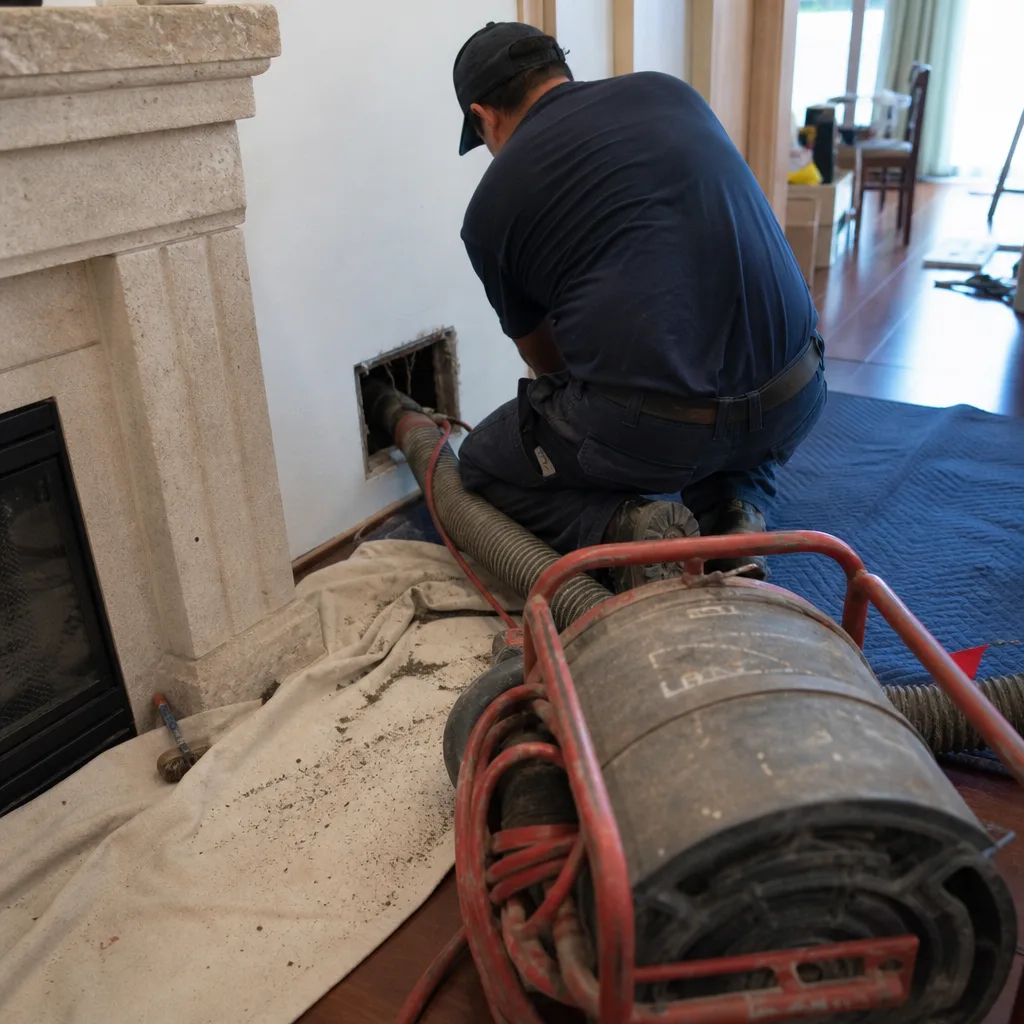 Before
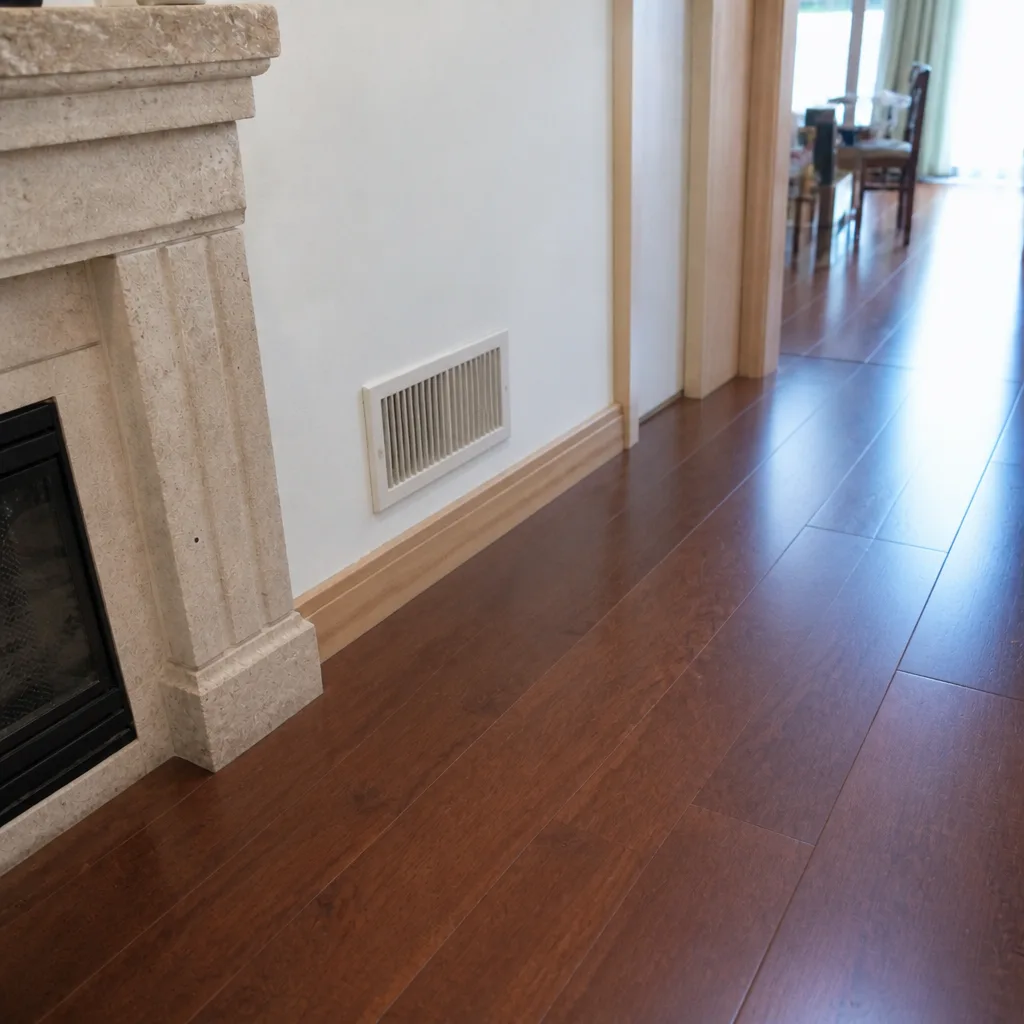 After
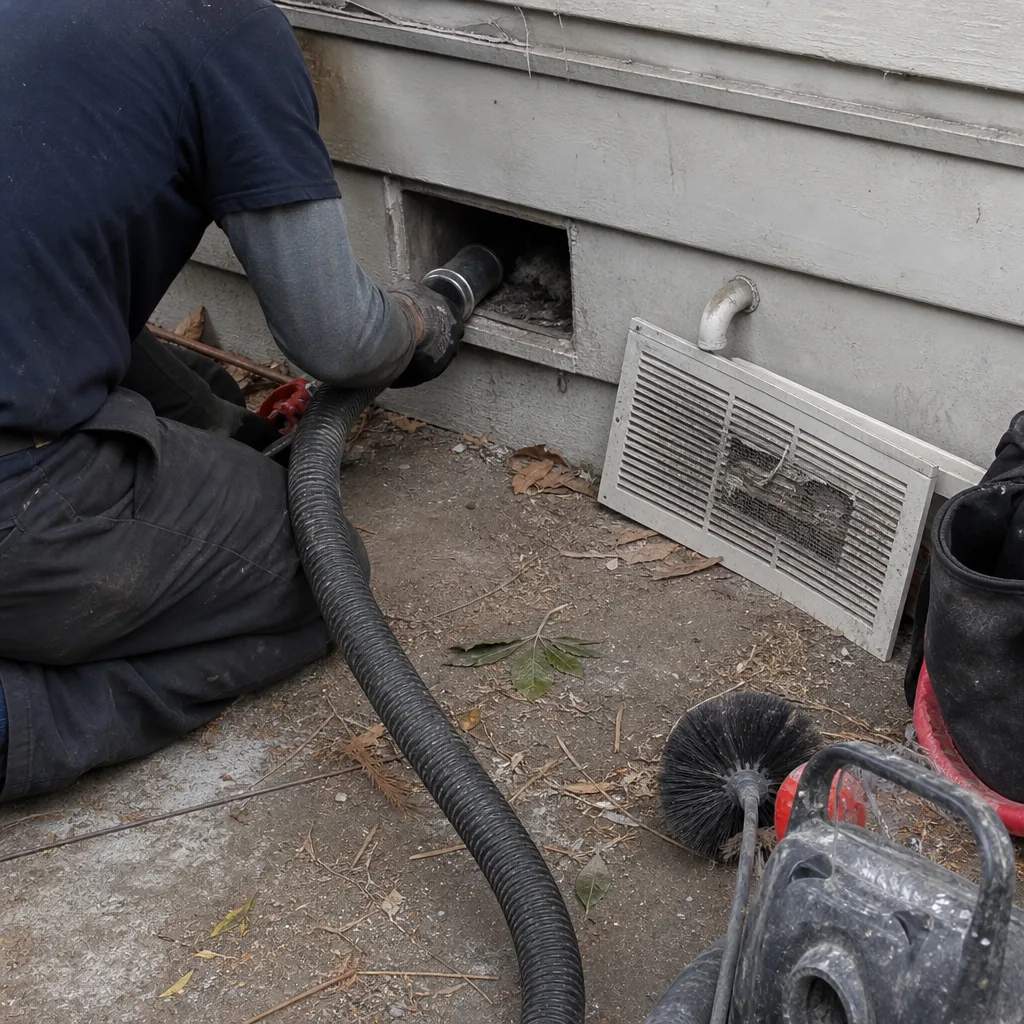 Before
 After
 Before
 After
Common Mistakes to Avoid
- Running the same cheap filter for a full year. A 1-inch MERV-8 loaded with Richmond pollen and smoke particulate is doing nothing by month four. Replace on the actual loading pattern, not on the marketing interval on the package.
- Upgrading to MERV-13 without checking the slot depth. A 1-inch MERV-13 in an undersized slot chokes the blower and leads to an overheated system. If you want MERV-13 performance, the right move is usually a 4-inch media cabinet, not a thicker filter jammed into a thin slot.
- Confusing a fast visit with a thorough cleaning. A register-only cleaning takes twenty minutes because it doesn’t touch the trunk line. A real cleaning takes longer because it has to. If a crew is done in under an hour on a whole-house job, ask questions.
- Assuming any “duct cleaning” visit included a repair assessment. Cleaning-only companies are exactly that: cleaning-only. They will not flag a crushed branch line because fixing it isn’t in their scope. Ask explicitly whether the visit includes an inspection of the accessible duct runs.
- Forgetting the dryer vent cleaning side of the checklist. Lint accumulation in a dryer vent is a leading cause of residential fires, and the vent is subject to the same loading pattern as your ducts. It belongs on the annual maintenance calendar, not the “maybe someday” list.
- Waiting until a health event to act. If you’ve had allergy flare-ups or a family member with a respiratory condition has moved in, the time to check the ducts is now, not after the next smoke season.
- Not asking for before-and-after photos. We can’t emphasize this enough. Photos of your own ducts are the single clearest answer to “did they actually clean it.”
When to Call a Professional
The DIY checklist above handles most of the routine maintenance. There are specific situations where it’s time to bring in a professional, and Richmond homeowners can usually name them from their own logs. Call if a room’s airflow has been weak for more than a season, if you’ve found visible damage at a duct joint, if musty odors persist after a filter change, or if your home hasn’t had a full cleaning in five or more years. Recent renovations and a prior budget cleaning that lacked before-and-after photos are also reasons to bring in a second set of eyes. Our technicians have up to 15 years of experience and can diagnose both the cleaning and the repair side in a single visit. Meadow Air Duct Cleaning offers free estimates in Richmond, and we’ll show you what we find inside the system before we quote anything. Call (844) 459-0252 for a free estimate.
Frequently Asked Questions
Most Richmond homes are fine on a three-to-five-year cycle. Homes with pets, recent renovations, allergy concerns, or a worse-than-average smoke season should be on the shorter end. If you’ve never had a professional cleaning in the home you bought, treat the first year as a fresh start and get a documented baseline.
You don’t need a HEPA filter in the HVAC system during smoke season, and most residential systems can’t handle one without a pressure-drop problem. MERV-11 handles the fine smoke particulate that gets into a home’s return air, and it does so without the airflow penalty of a HEPA-rated filter that shouldn’t be in a residential system in the first place. Step up to MERV-11 before a smoke event and change it immediately after. Call (844) 459-0252 if you want help picking the right filter for your system.
A cleaning removes accumulated debris from the duct walls. A repair fixes structural problems like a crushed flex run, a disconnected joint or a damaged boot. Cleaning doesn’t fix damage, and repairing without cleaning means debris keeps flowing past the repaired section. Call (844) 459-0252 for a free estimate that covers both.
Vacuuming the register face is a fine maintenance habit and worth doing. It doesn’t touch the branch lines, the trunk line or the boot interiors, which is where the actual build-up lives. Register-vacuuming keeps the face clean; it doesn’t clean the system. Call (844) 459-0252 for a free estimate if you’ve been keeping up with the faces and want to know what the ducts behind them look like.
Ask for before-and-after photos of your ducts, check the boot interior behind one or two registers the same day, and read the invoice scope. A real cleaning leaves photographic evidence and a written scope that lists supply runs, returns and trunk. If a company can’t provide those, that tells you what you need to know. Call (844) 459-0252 for a free estimate with visual evidence at every step.
Sometimes, and sometimes it doesn’t. If the weak room’s branch line is blocked or partially collapsed from debris, cleaning improves the flow. If the line is crushed, disconnected or dampered shut, cleaning doesn’t help and repair is the fix. That’s why a proper assessment includes looking at the accessible duct runs and not just the register face. Call (844) 459-0252 for a free estimate and we’ll tell you which situation you’re in.
The Bottom Line
A Richmond duct maintenance checklist has to be built around local variables: the mild-damp climate that makes dust settle into films, the short run cycles during cooler months, and the wildfire-smoke window that turns the fall into a particulate event for the whole East Bay. Follow the month-by-month calendar, do the five visual checks monthly, use MERV-8 for baseline filtration and MERV-11 during smoke, and keep a documented record with photos, airflow notes and service records. That record is the answer to every “did they actually clean the ducts” question you’ll ever have. When it’s time to bring in a professional, ask what equipment they use, what the invoice scope is and whether they’ll show you the before-and-after. Clean ducts start with the right process, and the right process leaves evidence you can see.
Written by the team at Meadow Air Duct Cleaning.